Patina
noun /ˈpætɪnə/ — The beautiful surface quality acquired through age and handling.
Definition
A thin layer formed on the surface of bronze, copper, or other metals by oxidation over time; more broadly, the surface sheen or character acquired by any object through age, use, and experience.
Beyond the definition
Patina is what makes old beautiful. The aged surface of a bronze that has been touched by centuries of hands; the warm varnish on an old desk that has absorbed years of use. In objects, patina is the visible record of a life lived.
Origin & history
From Italian and Latin patina (a shallow dish, pan). First referred to the green film on old bronze, then expanded to the general quality of aged surfaces and the appeal of age itself.
Example sentences
Illustrative sentences for learning, not verified community posts or sourced quotations.
The bronze acquired a beautiful verdigris patina over three centuries of exposure.
Her voice had a patina of experience — warm, worn, immediately trustworthy.
They preserved the old wood rather than refinishing it, knowing the patina was irreplaceable.
Synonyms
Antonyms
freshness, pristine surface, newness
Related words
Word in the Wild
See how this word appears in life, language and stories.
Illustrative sentences and imagined stories for learning — not verified sightings, interviews, or sourced quotations.
Fictional scene
Vines on Old Chair
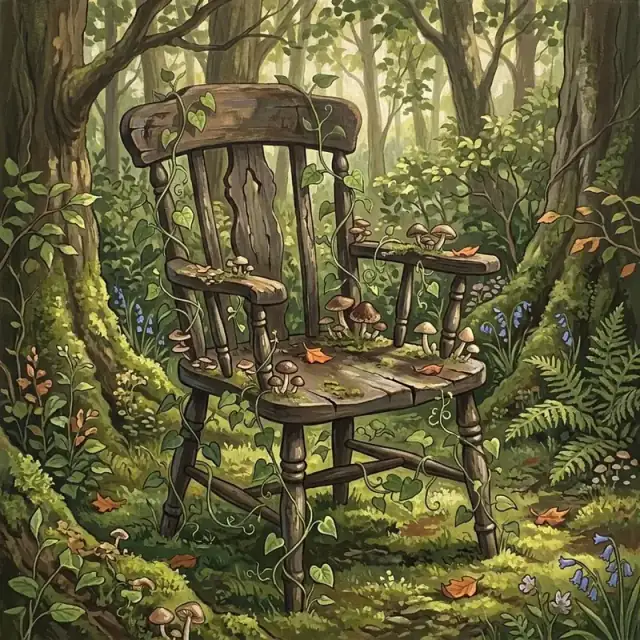
An old wooden chair sits on the forest floor, covered in moss and vines, signifying age and natural weathering.
The moss and weathering on the chair demonstrate the character and surface changes that accrue over time, representing the tangible patina formed by experience and age.
Image credit: Wordspun · AI-generated conceptual illustration