Provenance
noun /ˈprɒv(ə)nəns/ — The documented origin and ownership history of an artwork.
Definition
The place of origin or earliest known history of something — especially the record of ownership of a work of art or antique, used as a guide to authenticity and value.
Beyond the definition
Provenance is biography for objects. A painting with clear provenance has a story; one without it carries suspicion. In a deeper sense, to ask for provenance is to ask: where has this been, who has held it, and what did it mean to them?
Origin & history
From French provenance, from provenir (to come from, to originate), from Latin provenire. First used in English in the late 18th century for the documented history of artworks and antiques.
Example sentences
Illustrative sentences for learning, not verified community posts or sourced quotations.
The painting was valuable not only for its quality but for its impeccable provenance — from palace to museum without a gap.
She traced the chair's provenance to a workshop in 18th-century Vienna.
He liked knowing the provenance of his ideas — where they had come from, who had held them before him.
Synonyms
Antonyms
unknown origin, anonymous
Related words
Provenance vs pedigree
Provenance tracks the history and ownership chain of an object or work of art. Pedigree is typically used for lineage, especially when referring to the ancestry or bloodline of animals or people.
Compare this word
Word in the Wild
See how this word appears in life, language and stories.
Illustrative sentences and imagined stories for learning — not verified sightings, interviews, or sourced quotations.
Fictional scene
Naturalist workbench with various stones
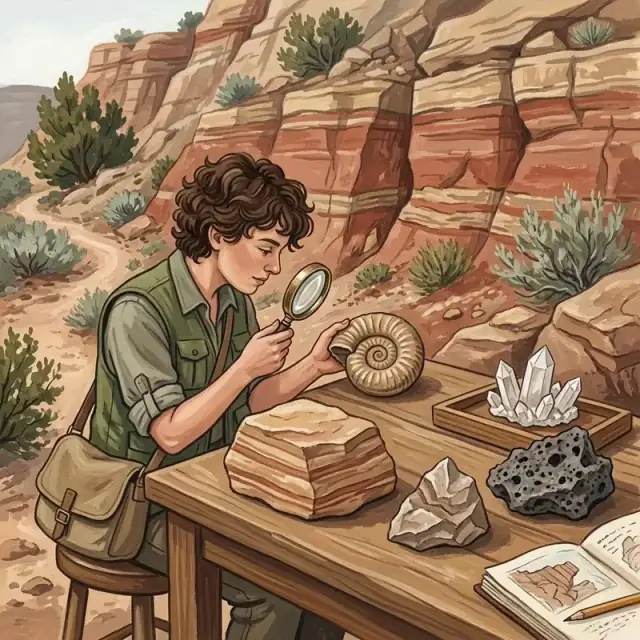
A workbench displays layered sedimentary stone, a spiral fossil, and quartz crystals, showing the history of these materials.
The arrangement of stones and fossils serves as a guide to the origin and history of these items, showing how their physical characteristics act as a record of their earliest known state.
Image credit: Wordspun · AI-generated conceptual illustration