Verisimilitude
noun /ˌvɛrɪsɪˈmɪlɪtjuːd/ — The quality of seeming true or real.
Definition
The appearance of being true or real; the quality that makes fiction or art feel like it could actually have happened — not truth itself, but its convincing impression.
Beyond the definition
Verisimilitude is the art of being believed. The novelist who achieves it makes you forget you are reading. The actor who achieves it disappears into the role. It is the highest technical achievement of representation — making the audience forget representation is happening.
Origin & history
From Latin verisimilitudo, from verisimilis (likely, probable) — from verus (true) + similis (like). First used in English in the late 16th century in the context of dramatic and literary realism.
Example sentences
Illustrative sentences for learning, not verified community posts or sourced quotations.
The period drama achieved verisimilitude through its obsessive attention to historical detail.
Great fiction requires verisimilitude — not accuracy, but the feeling of accuracy.
She spoke with such verisimilitude about her supposed childhood in Paris that no one questioned it.
Synonyms
realism, plausibility, convincingness, lifelikeness
Antonyms
implausibility, artifice, unreality
Related words
Word in the Wild
See how this word appears in life, language and stories.
Illustrative sentences and imagined stories for learning — not verified sightings, interviews, or sourced quotations.
Fictional scene
Artisan adjusting clock gear
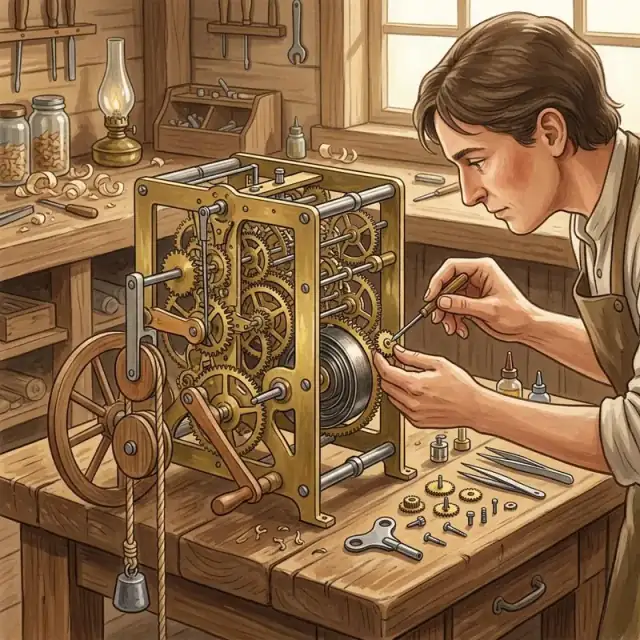
An artisan adjusts a visible brass gear with a fine tool at their workshop bench, creating a convincing machine.
The intricate, functional appearance of the brass gears and levers makes the mechanical device feel like it could actually work, providing a convincing impression of a real, functional mechanism.
Image credit: Wordspun · AI-generated conceptual illustration