Realism
noun /ˈrɪəlɪzəm/ — The belief that reality exists independently of our perception — and in art, depicting the world as it actually is.
Definition
The doctrine that universals or abstract concepts have an objective or absolute existence; the theory that external reality exists independently of the observer; in art and literature, close observation and accurate representation of the actual, without idealization.
Beyond the definition
Realism is the philosophy and aesthetic of honest looking — the realist refuses the comfort of idealization. In philosophy, it insists the world is there even when you're not looking; in art, it depicts the ugly and true alongside the beautiful.
Origin & history
From real (Medieval Latin realis: actual, from Latin res: thing) + -ism. The philosophy of the actual thing — the res itself, independent of what we think about it.
Example sentences
Illustrative sentences for learning, not verified community posts or sourced quotations.
Her political realism was not cynicism but clear-sightedness: she worked with what was actually available.
The Realist painters of the 19th century made the ordinary extraordinary by looking at it without embellishment.
Realism in philosophy and realism in everyday speech are related: both insist on what's actually there.
How to use it
This entry uses a noun. Follow the examples for articles and singular or plural forms; not every noun takes “a” or “an.”
Choose “Realism” when the meaning fits your context: The doctrine that universals or abstract concepts have an objective or absolute existence; the theory that external reality exists independently of the observer; in art and literature, close observation and accurate representation of the actual, without idealization.
Synonyms
pragmatism, objectivism, naturalism, practicality
Antonyms
idealism, romanticism, utopianism
Related words
Compare this word
Word in the Wild
See how this word appears in life, language and stories.
Illustrative sentences and imagined stories for learning — not verified sightings, interviews, or sourced quotations.
Fictional scene
Attentive Medical Consultation
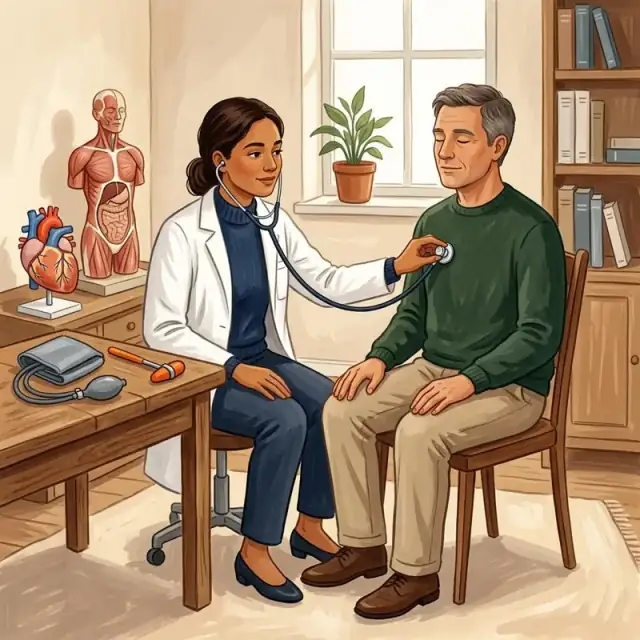
A clinician listens to a patient’s chest with a stethoscope while other anatomical models sit on the table in a consultation room.
The focus on accurate examination and the presence of tangible, anatomical models reflect realism in both a literal and philosophical sense. The scene emphasizes observation and the representation of actual, physical reality rather than assumption, acknowledging the patient’s body as a concrete, independent entity.
Image credit: Wordspun · AI-generated conceptual illustration
Questions about this word
What does "Realism" mean?
Realism is noun meaning: The belief that reality exists independently of our perception — and in art, depicting the world as it actually is.. The doctrine that universals or abstract concepts have an objective or absolute existence; the theory that external reality exists independently of the observer; in art and literature, close observation and accurate representation of the actual, without idealization.
Where does the word "Realism" come from?
From real (Medieval Latin realis: actual, from Latin res: thing) + -ism. The philosophy of the actual thing — the res itself, independent of what we think about it.