Trompe-l'oeil
noun /trɒmp ˈlɔɪ/ — Art that deceives the eye into perceiving three dimensions.
Definition
A style of painting or decoration that creates an extremely realistic illusion of three-dimensional space or objects on a flat surface — French for 'deceives the eye'.
Beyond the definition
Trompe-l'oeil is an act of conspiracy between painter and viewer — the painter tries to fool you, you half-want to be fooled. The pleasure is in the disbelief: your eye says real, your hand says flat. Beauty achieved through friendly deception.
Origin & history
French: tromper (to deceive) + l'oeil (the eye). The technique dates to antiquity — Pliny records that the painter Zeuxis painted grapes so realistic that birds flew down to peck at them.
Example sentences
Illustrative sentences for learning, not verified community posts or sourced quotations.
The ceiling's trompe-l'oeil made the chapel appear to open directly into the sky.
She painted a trompe-l'oeil bookshelf on the wall of her studio — complete with shadows.
He had a trompe-l'oeil quality — the warmth seemed genuine until you looked too closely.
How to use it
This entry uses a noun. Follow the examples for articles and singular or plural forms; not every noun takes “a” or “an.”
Choose “Trompe-l'oeil” when the meaning fits your context: A style of painting or decoration that creates an extremely realistic illusion of three-dimensional space or objects on a flat surface — French for 'deceives the eye'.
Synonyms
illusion, visual deception, hyperrealism
Antonyms
abstraction, impressionism
Related words
Word in the Wild
See how this word appears in life, language and stories.
Illustrative sentences and imagined stories for learning — not verified sightings, interviews, or sourced quotations.
Fictional scene
Weathered Stone Griffin Statue
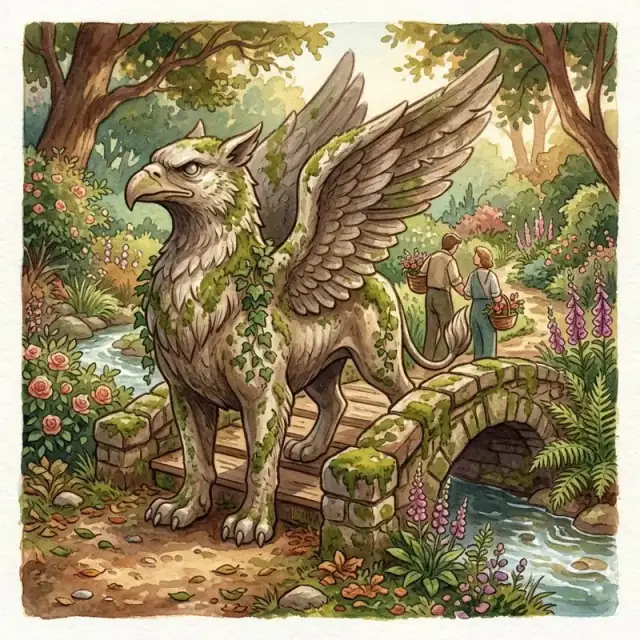
A moss-covered, weathered storybook griffin statue stands on a garden bridge, appearing lifelike despite its stone composition.
The statue illustrates the trompe-loeil concept by appearing as an extremely realistic, three-dimensional figure. The artist’s work on the wings and anatomy creates an illusion that deceives the eye, making the stone sculpture look like a living, breathing mythic creature.
Image credit: Wordspun · AI-generated conceptual illustration
Questions about this word
What does "Trompe-l'oeil" mean?
Trompe-l'oeil is noun meaning: Art that deceives the eye into perceiving three dimensions.. A style of painting or decoration that creates an extremely realistic illusion of three-dimensional space or objects on a flat surface — French for 'deceives the eye'.
Where does the word "Trompe-l'oeil" come from?
French: tromper (to deceive) + l'oeil (the eye). The technique dates to antiquity — Pliny records that the painter Zeuxis painted grapes so realistic that birds flew down to peck at them.