Anarchy
noun /ˈæn.ə.ki/ — Absence of government or order; political philosophy rejecting external authority.
Definition
A state of disorder due to absence or non-recognition of authority. Also: the political philosophy that rejects all involuntary, coercive forms of government — arguing that humans can organise voluntarily without state power.
Beyond the definition
Anarchy is the most misunderstood political term. To most people it means chaos. To its theorists — Kropotkin, Bakunin, Goldman — it meant the opposite: a society based on voluntary cooperation rather than coerced obedience.
Origin & history
Greek: 'anarkhia' (without a ruler). From 'an' (without) + 'arkhein' (to rule). The original sense was simply 'no ruler' — which its critics interpreted as chaos and its advocates as freedom.
Example sentences
Illustrative sentences for learning, not verified community posts or sourced quotations.
The city's traffic operated in what appeared to be anarchy but was in fact a complex spontaneous order.
Anarchism doesn't believe in no order — it believes in order that doesn't require force to maintain.
She described the project's early days as productive anarchy: no rules, no hierarchy, everything possible.
How to use it
This entry uses a noun. Follow the examples for articles and singular or plural forms; not every noun takes “a” or “an.”
Choose “Anarchy” when the meaning fits your context: A state of disorder due to absence or non-recognition of authority. Also: the political philosophy that rejects all involuntary, coercive forms of government — arguing that humans can organise voluntarily without state power.
Synonyms
chaos, disorder, lawlessness, libertarianism
Antonyms
order, governance, authority
Related words
Anarchy vs chaos
Anarchy specifically denotes the absence of a formal governing body or state authority. Chaos refers to a state of total disorder and confusion, which may be a result of anarchy but is not its formal definition.
Word in the Wild
See how this word appears in life, language and stories.
Illustrative sentences and imagined stories for learning — not verified sightings, interviews, or sourced quotations.
Fictional scene
Adult in Vast Empty Room
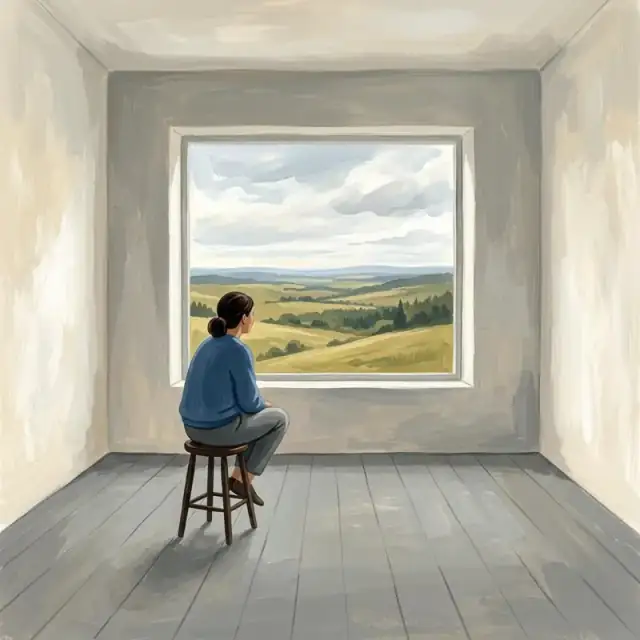
An adult sits alone in a large, empty room with a window overlooking an open landscape.
The absence of any furniture or order in the room can represent a state of anarchy, where the lack of an imposed structure forces the individual to exist in complete, self-directed freedom.
Image credit: Wordspun · AI-generated conceptual illustration
Questions about this word
What does "Anarchy" mean?
Anarchy is noun meaning: Absence of government or order; political philosophy rejecting external authority.. A state of disorder due to absence or non-recognition of authority. Also: the political philosophy that rejects all involuntary, coercive forms of government — arguing that humans can organise voluntarily without state power.
Where does the word "Anarchy" come from?
Greek: 'anarkhia' (without a ruler). From 'an' (without) + 'arkhein' (to rule). The original sense was simply 'no ruler' — which its critics interpreted as chaos and its advocates as freedom.