Schadenfreude
noun /ˈʃɑːdənfrɔɪdə/ — The guilty pleasure of someone else's misfortune.
Definition
Pleasure derived from another person's misfortune; the enjoyment that comes from someone else's bad luck.
Beyond the definition
The word we needed to admit a feeling we'd prefer not to have. Schadenfreude is universal, mildly shameful, and deeply human. Naming it makes it easier to observe in yourself without judgment.
Origin & history
From German Schaden 'damage, harm' + Freude 'joy.' The joy of harm — someone else's harm.
Example sentences
Illustrative sentences for learning, not verified community posts or sourced quotations.
She'd be the last to admit the schadenfreude she felt when his pitch failed.
Watching reality TV is really just licensed schadenfreude.
The schadenfreude was real, and she didn't feel great about that.
Synonyms
malicious enjoyment, gloating, taking pleasure in others' pain
Antonyms
sympathy, compassion, empathy
Related words
Schadenfreude vs envy
Envy is painful — it's the discomfort of wanting what someone else has. Schadenfreude is the pleasurable flip side: enjoyment at someone else's misfortune, especially when that person seemed to be doing better than you. Envy says 'I want that'; schadenfreude says 'I'm glad they lost it.' The two can coexist: the person you envied most is the person whose downfall delights you most. Both are about the gap between your situation and theirs.
Word in the Wild
See how this word appears in life, language and stories.
Illustrative sentences and imagined stories for learning — not verified sightings, interviews, or sourced quotations.
Fictional scene
Team blaming goalkeeper for defeat
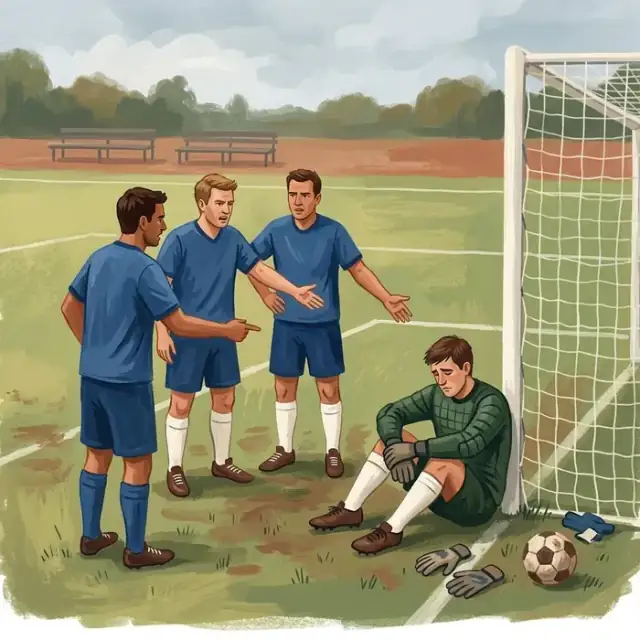
A football team stands together, blaming an isolated goalkeeper for a collective, visible defeat on the field.
The focus on an isolated individual for a shared misfortune highlights the ugly enjoyment found in someone else's bad luck, illustrating a harmful lack of empathy within a competitive context.
Image credit: Wordspun · AI-generated illustration