Renaissance
noun /ˈrɛn.ɪ.sɑːns/ — A revival or renewed flourishing of art, culture, or ideas.
Definition
A revival of or renewed interest in something; the rebirth of a cultural or intellectual movement. Specifically, the great European cultural rebirth of the 14th–17th centuries that recovered classical knowledge and produced extraordinary art, literature, and science.
Beyond the definition
The Renaissance happened because people decided the world could be better — that human beings could paint like angels, think like gods, build like giants. Every Renaissance, personal or civilizational, begins with that belief.
Origin & history
French: 'renaissance' (rebirth). Italian: 'rinascimento'. The European Renaissance began in Florence in the 14th century, driven by rediscovery of Greek and Roman texts.
Example sentences
Illustrative sentences for learning, not verified community posts or sourced quotations.
She went through a creative renaissance after leaving her corporate job — writing, painting, learning everything at once.
The Italian Renaissance gave the world Leonardo, Michelangelo, Raphael, and the idea that human beings could achieve anything.
There is a quiet renaissance in vinyl records — people returning to physical music, to something that requires care.
How to use it
This entry uses a noun. Follow the examples for articles and singular or plural forms; not every noun takes “a” or “an.”
Choose “Renaissance” when the meaning fits your context: A revival of or renewed interest in something; the rebirth of a cultural or intellectual movement. Specifically, the great European cultural rebirth of the 14th–17th centuries that recovered classical knowledge and produced extraordinary art, literature, and science.
Synonyms
rebirth, revival, renewal, flourishing
Antonyms
decline, stagnation, dark age
Related words
Renaissance vs reformation
Renaissance refers to a cultural and intellectual rebirth, usually focused on art and humanism. Reformation specifically describes a restructuring or correction of established institutions, most famously the religious changes in Europe.
Word in the Wild
See how this word appears in life, language and stories.
Illustrative sentences and imagined stories for learning — not verified sightings, interviews, or sourced quotations.
Fictional scene
Transitional Era of Rebirth
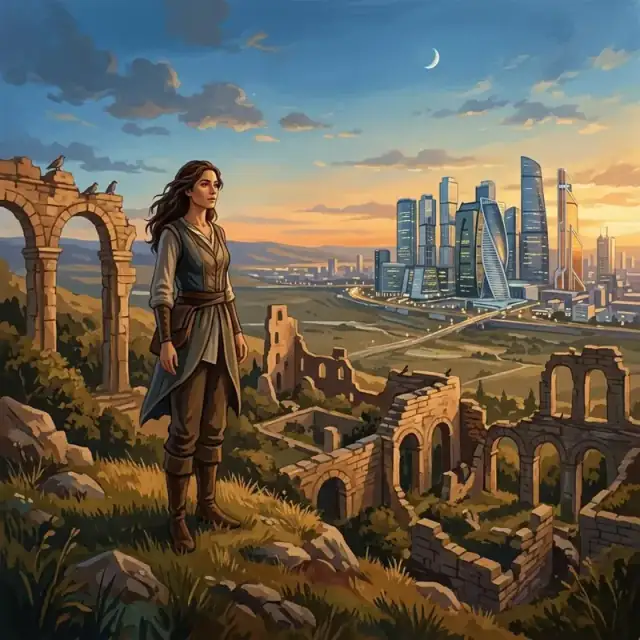
An adult looks over ruins in the foreground and a modern city in the distance.
The layering of ancient ruins against a modern city captures the spirit of a rebirth. It symbolizes the recovery and revival of past knowledge and culture to create a new, vibrant epoch.
Image credit: Wordspun · AI-generated conceptual illustration
Questions about this word
What does "Renaissance" mean?
Renaissance is noun meaning: A revival or renewed flourishing of art, culture, or ideas.. A revival of or renewed interest in something; the rebirth of a cultural or intellectual movement. Specifically, the great European cultural rebirth of the 14th–17th centuries that recovered classical knowledge and produced extraordinary art, literature, and science.
Where does the word "Renaissance" come from?
French: 'renaissance' (rebirth). Italian: 'rinascimento'. The European Renaissance began in Florence in the 14th century, driven by rediscovery of Greek and Roman texts.