Avant-Garde
noun / adjective /ˌæv.ɒ̃ˈɡɑːd/ — New and experimental ideas that push the boundaries of art.
Definition
Work, ideas, or the people who create them that are ahead of their time — experimental, radical, and often initially rejected before becoming mainstream. The avant-garde is perpetually in conflict with the established.
Beyond the definition
Every great movement was once the avant-garde — misunderstood, marginal, and entirely right. What is radical today is the academy of tomorrow.
Origin & history
French: 'avant' (before) + 'garde' (guard). Originally a military term for the soldiers sent ahead of the main army. Adopted into art in the 19th century to describe radical artists.
Example sentences
Illustrative sentences for learning, not verified community posts or sourced quotations.
The Impressionists were dismissed as avant-garde rabble before they became the most beloved painters in history.
Her music was too avant-garde for radio — not because it was bad, but because no one had heard anything like it.
The avant-garde exists to remind us that what seems strange today will seem obvious in a decade.
How to use it
Follow this entry’s examples for grammatical form and sentence placement.
Choose “Avant-Garde” when the meaning fits your context: Work, ideas, or the people who create them that are ahead of their time — experimental, radical, and often initially rejected before becoming mainstream. The avant-garde is perpetually in conflict with the established.
Synonyms
experimental, vanguard, pioneering, radical
Antonyms
conservative, traditional, conventional
Related words
Avant-Garde vs woke
Avant-garde refers to artistic innovation and breaking aesthetic boundaries. Woke refers specifically to political and social awareness regarding systemic injustice.
Word in the Wild
See how this word appears in life, language and stories.
Illustrative sentences and imagined stories for learning — not verified sightings, interviews, or sourced quotations.
Fictional scene
Growth Breaking Established Form
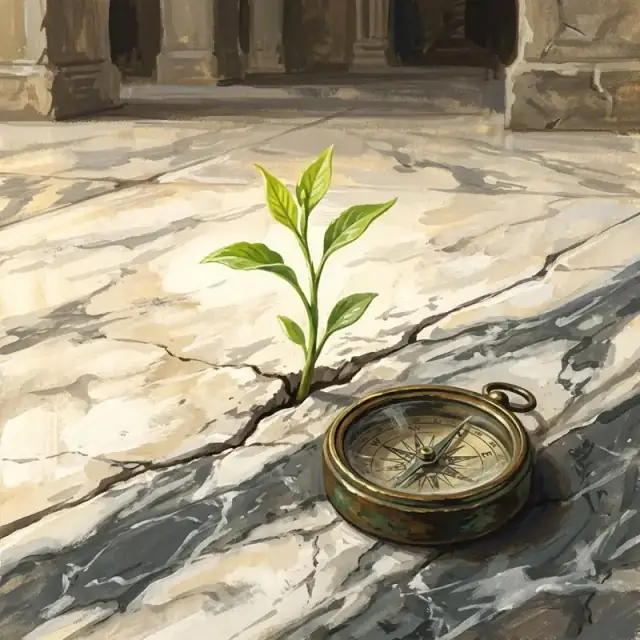
A vibrant green shoot grows through a jagged crack in a heavy marble floor.
The shoot is an experimental force, challenging the established permanence of the marble. Like the avant-garde, it is ahead of its time, pushing against the mainstream order to create something entirely new and radical.
Image credit: Wordspun · AI-generated conceptual illustration
Questions about this word
What does "Avant-Garde" mean?
Avant-Garde is noun / adjective meaning: New and experimental ideas that push the boundaries of art.. Work, ideas, or the people who create them that are ahead of their time — experimental, radical, and often initially rejected before becoming mainstream. The avant-garde is perpetually in conflict with the established.
Where does the word "Avant-Garde" come from?
French: 'avant' (before) + 'garde' (guard). Originally a military term for the soldiers sent ahead of the main army. Adopted into art in the 19th century to describe radical artists.