Ochre
noun / adjective /ˈəʊ.kər/ — An earthy yellow-brown pigment
Definition
An earthy yellow to orange-brown pigment — one of the oldest pigments in human history, made from iron-rich clay. Used in cave paintings and in every artistic tradition since.
Beyond the definition
The colour of ancient things — cave walls, African soil, terracotta, the desert at noon. Ochre is as old as human mark-making.
Origin & history
From Greek 'ōkhra' (pale yellow) — from 'ōkhros' (pale yellow, pale). The word is older than most European languages — the pigment is older still.
Example sentences
Illustrative sentences for learning, not verified community posts or sourced quotations.
The Aboriginal painters used ochre — the same pigment their ancestors had used for 65,000 years.
The adobe houses were ochre in the afternoon light, the colour of the earth they were made from.
She mixed ochre into the yellow to warm it — the slight dirtiness was what the painting needed.
How to use it
Follow this entry’s examples for grammatical form and sentence placement.
Choose “Ochre” when the meaning fits your context: An earthy yellow to orange-brown pigment — one of the oldest pigments in human history, made from iron-rich clay. Used in cave paintings and in every artistic tradition since.
Synonyms
yellow-brown, earth yellow, amber, yellow clay
Related words
Word in the Wild
See how this word appears in life, language and stories.
Illustrative sentences and imagined stories for learning — not verified sightings, interviews, or sourced quotations.
Fictional scene
Ancient Earthy Pigment Sources
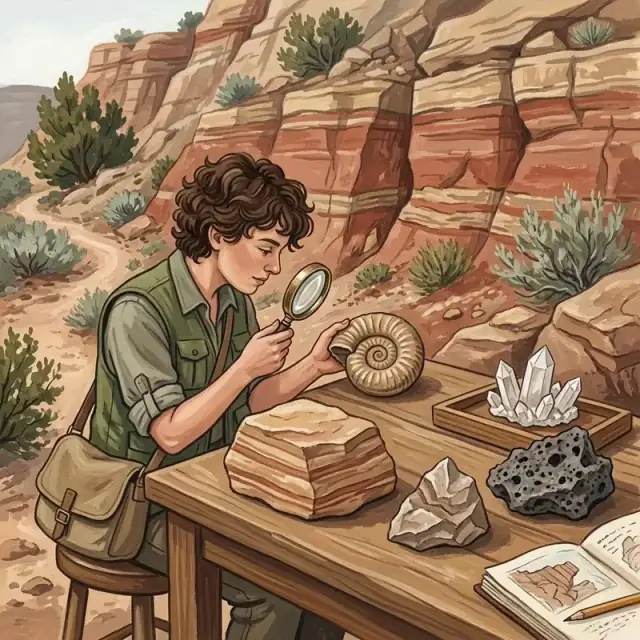
A naturalist’s workbench features layered sedimentary stone, a spiral fossil, and quartz crystals, showing natural earthy tones like yellow-brown.
Ochre is one of the oldest human pigments, made from iron-rich clay. The rocks on the workbench exhibit the natural, warm yellow-brown hues of raw ochre, showing its geological origin and justifying its long history of use as an earthy, foundational pigment in art.
Image credit: Wordspun · AI-generated conceptual illustration
Questions about this word
What does "Ochre" mean?
Ochre is noun / adjective meaning: An earthy yellow-brown pigment. An earthy yellow to orange-brown pigment — one of the oldest pigments in human history, made from iron-rich clay. Used in cave paintings and in every artistic tradition since.
Where does the word "Ochre" come from?
From Greek 'ōkhra' (pale yellow) — from 'ōkhros' (pale yellow, pale). The word is older than most European languages — the pigment is older still.