Mono no Aware
noun /ˌmɒnəʊ nəʊ əˈwɑːreɪ/ — The gentle sadness of knowing beautiful things must pass.
Definition
Japanese: the bittersweet awareness of impermanence; a pathos of things — sensitivity to the ephemeral nature of existence, tinged with both sadness and appreciation.
Beyond the definition
Introduced by the 18th-century scholar Motoori Norinaga, mono no aware is the feeling you get watching cherry blossoms fall — beauty made more beautiful by its brevity. It's the central aesthetic principle of Japanese culture.
Origin & history
From Japanese mono 'things' + no (possessive particle) + aware 'pathos, poignancy.' The pathos of things. The melancholy and beauty of the transient.
Example sentences
Illustrative sentences for learning, not verified community posts or sourced quotations.
The Japanese aesthetic of mono no aware explains why cherry blossom season is both celebrated and mourned.
She felt mono no aware looking at old photographs — the joy and the ache inseparable.
Mono no aware is the feeling that nothing stays, and that everything is beautiful partly because of this.
Synonyms
impermanence, bittersweet, pathos, transience, wistfulness
Antonyms
permanence, indifference, denial
Related words
Mono no Aware vs bittersweet ephemerality
Bittersweet ephemerality is a fleeting emotional reaction. Mono no aware is a deep, meditative empathy for the impermanence of all things, acknowledging the sadness and beauty of change.
Word in the Wild
See how this word appears in life, language and stories.
Illustrative sentences and imagined stories for learning — not verified sightings, interviews, or sourced quotations.
Fictional scene
Reclaimed chair in forest
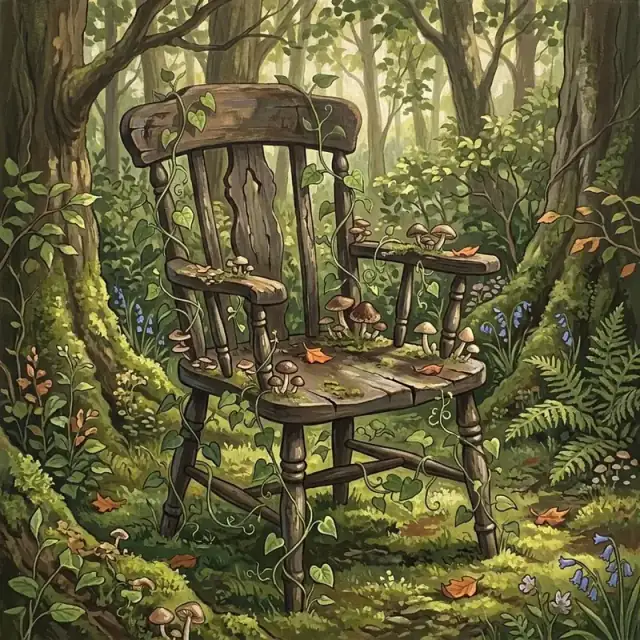
A beautiful, old wooden chair is being slowly reclaimed by the forest floor, with vines wrapping around it.
The chair’s quiet, dignified deterioration illustrates the awareness of impermanence. It is a bittersweet scene that blends sadness for the object's decay with an appreciation for its return to nature, capturing the natural cycle of all things.
Image credit: Wordspun · AI-generated conceptual illustration