Camouflage
noun /ˈkæm.ə.flɑːʒ/ — Natural or artificial concealment by blending into surroundings.
Definition
The use of color, pattern, shape, or behavior to blend into the surrounding environment and avoid detection — a primary survival strategy in the natural world. Found in insects, fish, reptiles, mammals, and birds.
Beyond the definition
Camouflage is the art of becoming what surrounds you, for the purposes of survival. In nature, it is elegant engineering. In people, it can be armor — the hiding of what is real beneath what is safe.
Origin & history
From French 'camoufler' (to camouflage); from Italian 'camuffare' (to disguise). Widely adopted during World War I when military concealment became a formal discipline.
Example sentences
Illustrative sentences for learning, not verified community posts or sourced quotations.
The cuttlefish can change color and texture in milliseconds — camouflage so sophisticated it borders on performance art.
Stick insects are camouflage made architecture — the body itself designed to be invisible.
She had spent years in professional camouflage — the careful performance of who they wanted, concealing who she was.
How to use it
This entry uses a noun. Follow the examples for articles and singular or plural forms; not every noun takes “a” or “an.”
Choose “Camouflage” when the meaning fits your context: The use of color, pattern, shape, or behavior to blend into the surrounding environment and avoid detection — a primary survival strategy in the natural world. Found in insects, fish, reptiles, mammals, and birds.
Synonyms
concealment, disguise, mimicry, cryptic coloration
Antonyms
display, exposure, conspicuousness
Related words
Camouflage vs mimicry
Camouflage helps an animal hide by blending into the environment. Mimicry occurs when an animal evolves to look like another, more dangerous species.
Word in the Wild
See how this word appears in life, language and stories.
Illustrative sentences and imagined stories for learning — not verified sightings, interviews, or sourced quotations.
Fictional scene
Botanical Illustration With Leaf Tones
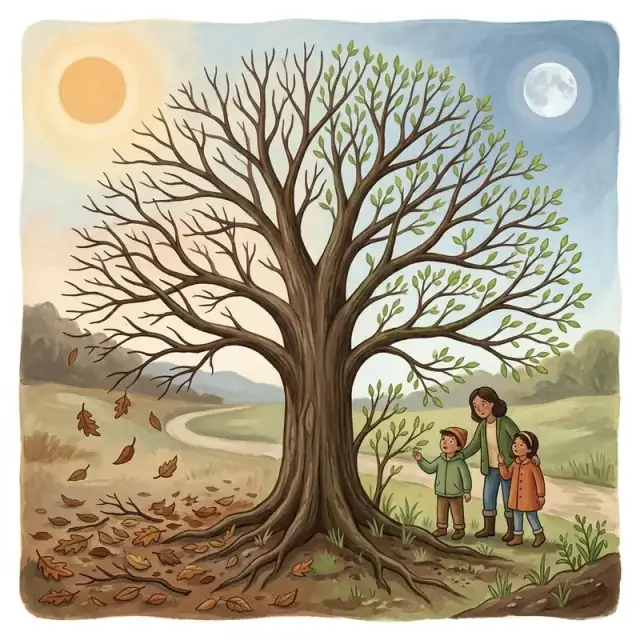
A botanical composition shows a tree with brown leaves at its roots and green leaves on its twigs, blending tones and patterns together.
Camouflage is the use of color or pattern to blend into the environment. By mixing different seasonal leaf tones, the tree minimizes its own visual profile, illustrating a primary survival strategy in nature.
Image credit: Wordspun · AI-generated conceptual illustration
Questions about this word
What does "Camouflage" mean?
Camouflage is noun meaning: Natural or artificial concealment by blending into surroundings.. The use of color, pattern, shape, or behavior to blend into the surrounding environment and avoid detection — a primary survival strategy in the natural world. Found in insects, fish, reptiles, mammals, and birds.
Where does the word "Camouflage" come from?
From French 'camoufler' (to camouflage); from Italian 'camuffare' (to disguise). Widely adopted during World War I when military concealment became a formal discipline.