Astringent
adjective /əˈstrɪndʒ(ə)nt/ — A drying, puckering sensation in the mouth.
Definition
Having a sharp, dry quality that causes the tissues of the mouth to contract — the drying, puckering sensation of tannins in wine, tea, or unripe fruit; in medicine, a substance that causes contraction of body tissues.
Beyond the definition
Astringent is the taste of structure — in wine, the tannins that dry your mouth are also what make the wine able to age. Not pleasant in isolation, but necessary for the whole. An astringent wit is similarly dry — not warm, but precise, a little uncomfortable, entirely honest.
Origin & history
From Latin astringentem (tightening), present participle of astringere (to bind fast), from ad- (to) + stringere (to bind). The root of strict, restrict, and stringent — all about tightening.
Example sentences
Illustrative sentences for learning, not verified community posts or sourced quotations.
The young Barolo had an astringent quality that would soften with another decade in the cellar.
Strong black tea drunk without milk has an astringent quality that wakes you up.
Her feedback was astringent but valuable — it dried out every excess.
How to use it
This entry uses an adjective. Follow the examples for the nouns it describes and its position in the sentence.
Choose “Astringent” when the meaning fits your context: Having a sharp, dry quality that causes the tissues of the mouth to contract — the drying, puckering sensation of tannins in wine, tea, or unripe fruit; in medicine, a substance that causes contraction of body tissues.
Synonyms
tannic, drying, sharp, puckering
Antonyms
smooth, round, velvety, lush
Related words
Word in the Wild
See how this word appears in life, language and stories.
Illustrative sentences and imagined stories for learning — not verified sightings, interviews, or sourced quotations.
Fictional scene
Contrast of Textures and Tastes
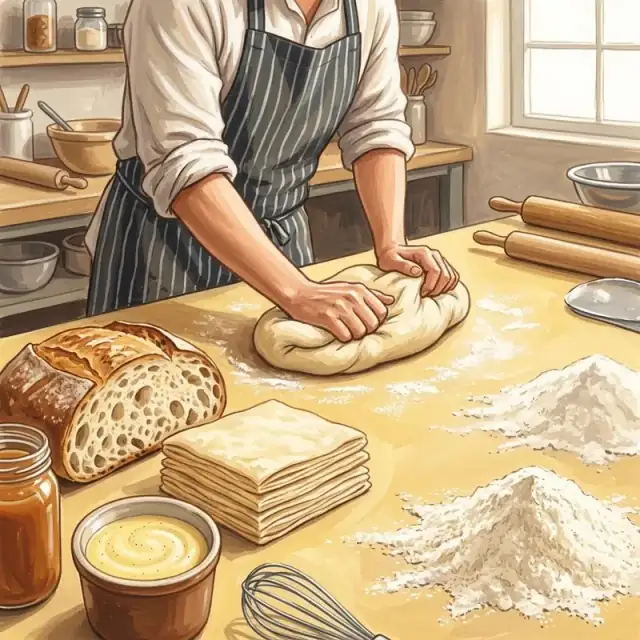
A baker at a counter works with elastic dough, while nearby lie airy bread, flaky pastry, and a smooth, thick, creamy custard bowl.
The image provides a visual analogy for astringent qualities by contrasting dry, airy, and flaky textures with the smooth richness of cream. Astringency is the dry, puckering sensation often found in teas or tannins, and the textural differences here represent the physical tactile response of tissues to such sharp, drying substances.
Image credit: Wordspun · AI-generated conceptual illustration
Questions about this word
What does "Astringent" mean?
Astringent is adjective meaning: A drying, puckering sensation in the mouth.. Having a sharp, dry quality that causes the tissues of the mouth to contract — the drying, puckering sensation of tannins in wine, tea, or unripe fruit; in medicine, a substance that causes contraction of body tissues.
Where does the word "Astringent" come from?
From Latin astringentem (tightening), present participle of astringere (to bind fast), from ad- (to) + stringere (to bind). The root of strict, restrict, and stringent — all about tightening.