Terroir
noun /tɛˈrwɑː/ — The taste of a place — soil, climate, and character in a glass.
Definition
The complete natural environment in which a wine or food is produced — including soil, climate, topography, and local microorganisms — and how these factors influence the flavor and character of the product.
Beyond the definition
Terroir is the argument that place has flavour — that a wine from one valley tastes different from the same grape grown three miles away, and that this difference is not accidental but essential. It is a philosophical position: that where something grows is part of what it is. The taste of particular land.
Origin & history
French: terroir (land, soil), from terre (earth), from Latin terra. Used specifically in wine and food production to describe the characteristic environmental factors that give a product its regional identity.
Example sentences
Illustrative sentences for learning, not verified community posts or sourced quotations.
The terroir of Burgundy is so specific that neighbouring vineyards produce wines of radically different character.
She could taste the terroir in the cheese — the particular grassland the milk had come from.
There is a terroir to a writer, too — the place and time that shaped them is in the prose.
Synonyms
regional character, place character, soil signature
Antonyms
industrial uniformity, generic flavour
Related words
Word in the Wild
See how this word appears in life, language and stories.
Illustrative sentences and imagined stories for learning — not verified sightings, interviews, or sourced quotations.
Fictional scene
Landscape after rain
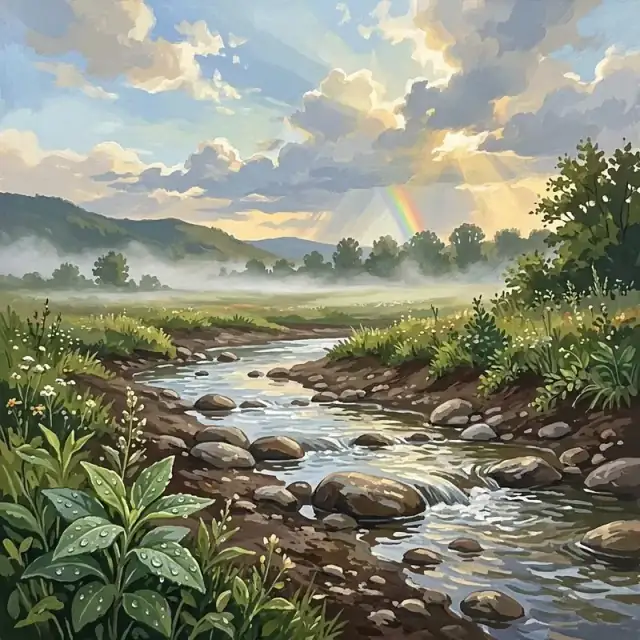
A wide landscape after rain shows a stream flowing over stones, damp soil, and mist over a meadow.
The stream, stones, and wet earth all contribute to the unique environment of the meadow. Terroir is the idea that the local soil, water, and weather shape the character of everything that develops within that specific, natural context.
Image credit: Wordspun · AI-generated conceptual illustration