Assuage
verb /əˈsweɪdʒ/ — To make an unpleasant feeling less intense.
Definition
To make a feeling of pain, distress, or discomfort less intense or severe; to calm, soothe, or relieve. Can also mean to satisfy a need or appetite.
Beyond the definition
Assuage is the word for when the intensity of something is carefully turned down. You assuage grief, not eliminate it. You assuage guilt — you don't erase it. There's a tenderness to the word: it acknowledges the feeling while working to ease its edges.
Origin & history
From Old French asuagier, from Latin ad- ('to') + suavis ('sweet'). To sweeten toward — to make a bitter thing more gentle.
Example sentences
Illustrative sentences for learning, not verified community posts or sourced quotations.
She tried to assuage his fears with a calm, steady presence.
Nothing could fully assuage the guilt he carried after that decision.
How to use it
This entry uses a verb. Follow the examples for tense and any objects or prepositions it needs.
Choose “Assuage” when the meaning fits your context: To make a feeling of pain, distress, or discomfort less intense or severe; to calm, soothe, or relieve. Can also mean to satisfy a need or appetite.
Synonyms
alleviate, soothe, mitigate, relieve, pacify
Antonyms
aggravate, intensify, worsen, inflame
Related words
- mollify
- placate
- allay
- temper
Assuage vs placate
Placate is about calming a person who is angry or upset — reducing interpersonal tension. Assuage is about easing an internal feeling — grief, guilt, fear, anxiety. You placate someone by managing their reaction to you; you assuage their grief by acknowledging what they feel. Placate works on the relationship; assuage works on the feeling. You can placate someone without addressing the feeling underneath; assuaging goes deeper.
Compare this word
Word in the Wild
See how this word appears in life, language and stories.
Illustrative sentences and imagined stories for learning — not verified sightings, interviews, or sourced quotations.
Fictional scene
Healing damage after the storm
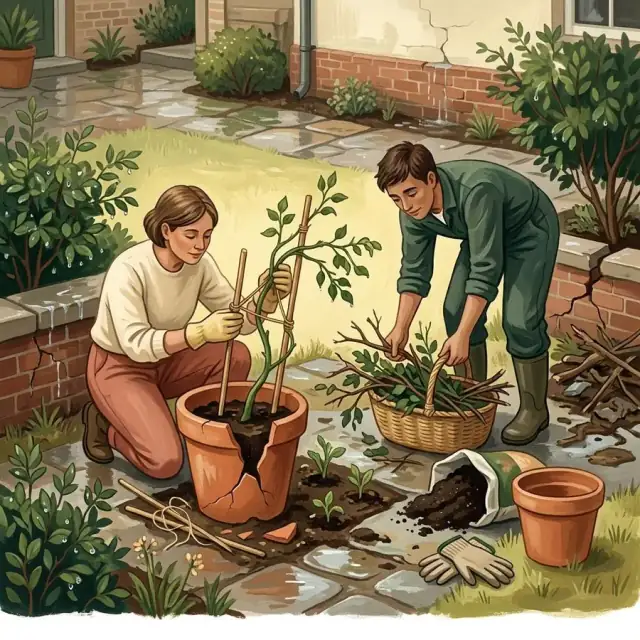
Neighbours restore a damaged garden, carefully staking a bent plant back upright beside broken branches and a cracked, unstable planter.
The act of staking the plant serves to soothe and stabilize its structural distress. This mimics the concept of assuaging pain or discomfort, providing a quiet, restorative intervention that helps return a fractured situation toward a state of normalcy.
Image credit: Wordspun · AI-generated illustration
Questions about this word
What does "Assuage" mean?
Assuage is verb meaning: To make an unpleasant feeling less intense.. To make a feeling of pain, distress, or discomfort less intense or severe; to calm, soothe, or relieve. Can also mean to satisfy a need or appetite.
Where does the word "Assuage" come from?
From Old French asuagier, from Latin ad- ('to') + suavis ('sweet'). To sweeten toward — to make a bitter thing more gentle.