Assonance
noun /ˈæsənəns/ — The repetition of vowel sounds — giving language a hidden music without a full rhyme.
Definition
The repetition of the same or similar vowel sounds in nearby words or syllables, creating a musical effect that falls short of full rhyme but generates subtle sonic harmony.
Beyond the definition
Assonance works below conscious awareness — you feel it before you hear it. The long vowels slow a line down, create a sense of heaviness or longing. Short vowels quicken. Poets tune poems with vowels the way musicians tune instruments.
Origin & history
From Latin assonare — to sound in response to (ad: to + sonus: sound). Sound answering sound — the vowel echoes across syllables.
Example sentences
Illustrative sentences for learning, not verified community posts or sourced quotations.
'Go slow over stony roads' — the long 'o' sounds create a rolling, unhurried assonance.
She rewrote the last line until the vowels opened up and made the reader slow down at exactly the right moment.
Assonance is the subtle music — readers feel it without being able to name it.
Synonyms
vowel rhyme, half-rhyme, vocalic harmony
Antonyms
Related words
Assonance vs alliteration
Alliteration focuses on repeated consonant sounds. Assonance involves the repetition of vowel sounds within nearby words.
Compare this word
Word in the Wild
See how this word appears in life, language and stories.
Illustrative sentences and imagined stories for learning — not verified sightings, interviews, or sourced quotations.
Fictional scene
Swirling Mixed Pigments
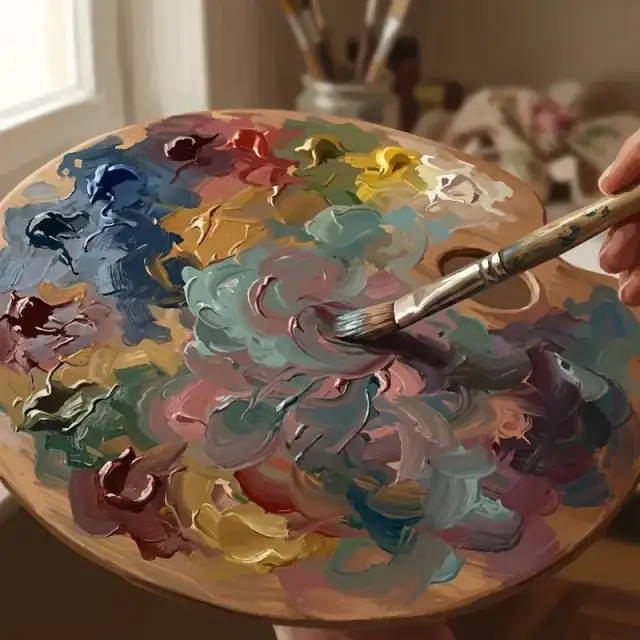
An artist’s palette is covered in thick, swirling, multi-colored pigments that blend into new, subtle shades, with the brush moving through the thick, textured paint.
Assonance is the repetition of vowel sounds creating a musical effect. The blending and swirling colors of the palette create a subtle, visual harmony—like the resonance of vowel sounds—as they interlock to form new, soft shades, capturing the essence of sonic harmony that falls short of full rhyme but generates texture.
Image credit: Wordspun · AI-generated conceptual illustration