Armistice
noun /ˈɑː.mɪ.stɪs/ — A formal agreement to stop fighting.
Definition
A formal agreement between opposing forces to stop fighting; a ceasefire of indefinite duration. An armistice halts hostilities but does not formally end a war — peace treaties do that. The word entered modern consciousness above all through the Armistice of 11 November 1918.
Beyond the definition
An armistice is the exhale after years of held breath — the moment the guns stop, before anyone fully understands what has ended or what is still to come.
Origin & history
From Modern Latin 'armistitium'; from Latin 'arma' (arms) + 'stitium' (a stop). A relatively modern coinage describing what had previously been called a truce.
Example sentences
Illustrative sentences for learning, not verified community posts or sourced quotations.
At 11 a.m. on 11 November 1918, the Armistice came into effect — soldiers on both sides wept without knowing exactly why.
The Korean War ended in an armistice in 1953, not a peace treaty — technically making it a war that never formally ended.
Every long argument eventually needs an armistice: a pause before either side has the clarity to negotiate peace.
How to use it
This entry uses a noun. Follow the examples for articles and singular or plural forms; not every noun takes “a” or “an.”
Choose “Armistice” when the meaning fits your context: A formal agreement between opposing forces to stop fighting; a ceasefire of indefinite duration. An armistice halts hostilities but does not formally end a war — peace treaties do that. The word entered modern consciousness above all through the Armistice of 11 November 1918.
Synonyms
ceasefire, truce, cessation of hostilities
Antonyms
war, offensive, hostilities
Related words
Armistice vs treaty
An armistice is a temporary ceasefire to stop fighting. A treaty is a formal, permanent agreement that officially ends a war or conflict.
Word in the Wild
See how this word appears in life, language and stories.
Illustrative sentences and imagined stories for learning — not verified sightings, interviews, or sourced quotations.
Fictional scene
Adult Requesting A Pause
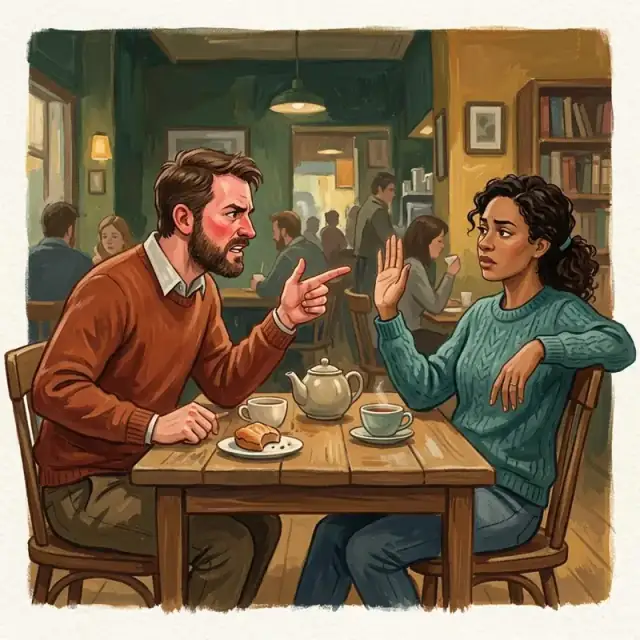
Two adults having a heated disagreement stand at a table; one leans back and raises an open hand to ask for a pause.
An armistice is a ceasefire of indefinite duration that halts hostilities without ending the conflict. The raised hand seeking a pause visualizes this temporary stop to fighting while underlining that resolution is not yet achieved.
Image credit: Wordspun · AI-generated conceptual illustration
Questions about this word
What does "Armistice" mean?
Armistice is noun meaning: A formal agreement to stop fighting.. A formal agreement between opposing forces to stop fighting; a ceasefire of indefinite duration. An armistice halts hostilities but does not formally end a war — peace treaties do that. The word entered modern consciousness above all through the Armistice of 11 November 1918.
Where does the word "Armistice" come from?
From Modern Latin 'armistitium'; from Latin 'arma' (arms) + 'stitium' (a stop). A relatively modern coinage describing what had previously been called a truce.