Wilderness
noun /ˈwɪldənɪs/ — Uncultivated land left to itself — the world as it existed before us.
Definition
An uncultivated, uninhabited region left in its natural condition; a wild and uncultivated area; also, a state of being outside of favour or influence.
Beyond the definition
Wilderness carries two meanings that illuminate each other: the geographical and the personal. To be in the wilderness is to be outside structure — whether that's a forest or a career slump. The word holds both the grandeur of natural landscape and the disorientation of being outside.
Origin & history
From Old English wildēornes — land of wild deer (wilde: wild + dēor: animal + -nes: state). Originally: where the wild animals are. A world that hasn't been reorganized for human convenience.
Example sentences
Illustrative sentences for learning, not verified community posts or sourced quotations.
She spent three weeks in the wilderness and returned to the city speaking more quietly.
The political wilderness is a strange place — visible enough to be called by name, invisible enough to feel forgotten.
There's a particular peace available in true wilderness: the relief of being irrelevant.
Synonyms
wild, backcountry, hinterland, wasteland, outback, tundra
Antonyms
civilization, settlement, cultivated land, city
Related words
Compare this word
Word in the Wild
See how this word appears in life, language and stories.
Illustrative sentences and imagined stories for learning — not verified sightings, interviews, or sourced quotations.
Fictional scene
Densely vegetated forest floor
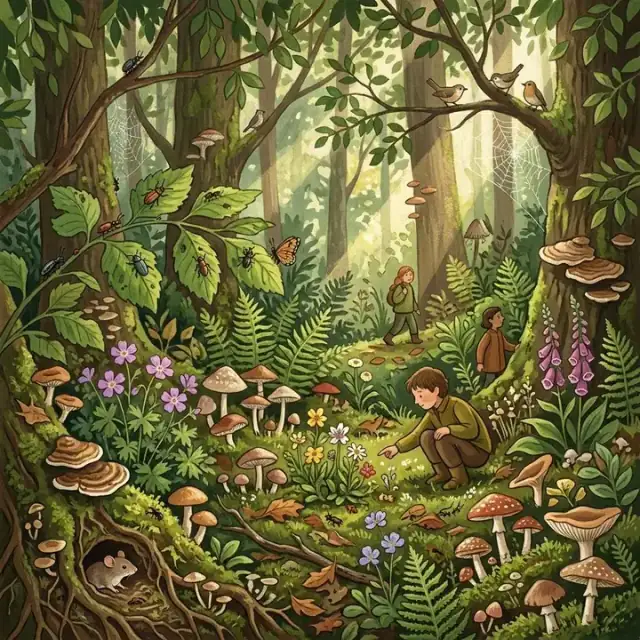
A vibrant woodland scene where sunlight filters through a thick canopy onto a forest floor teeming with diverse plants.
This untouched, uncultivated woodland represents a wild, natural region. It illustrates the state of a landscape left in its natural, untamed condition, free from human influence.
Image credit: Wordspun · AI-generated conceptual illustration