Rumination
noun /ˌruːmɪˈneɪʃən/ — The mental habit of replaying what went wrong.
Definition
The process of thinking deeply about something; in psychology, the compulsive, repetitive focus on distressing experiences or feelings.
Beyond the definition
Clinically distinct from reflection. Reflection is constructive — learning from experience. Rumination is the loop: replaying the argument, the mistake, the embarrassment until it's worn a groove in your thinking. Naming it is the first step to interrupting it.
Origin & history
From Latin ruminare — to chew the cud. Cows chew, swallow, regurgitate, and chew again. The mind does this too.
Example sentences
Illustrative sentences for learning, not verified community posts or sourced quotations.
Her rumination about the meeting kept her awake until 3am.
Rumination is the enemy of sleep — and the product of unresolved anxiety.
He'd learned to notice rumination and treat it like a thought loop, not a verdict.
Synonyms
brooding, dwelling, overthinking, replaying, obsessing
Antonyms
moving on, acceptance, mindfulness
Related words
- anxiety
- introspection
- overthinking
- equanimity
Rumination vs reflection
Reflection is constructive — thinking back in order to learn, integrate, or improve. Rumination is the same activity turned destructive: the same experience replayed on a loop without resolution, wearing a groove in the mind rather than generating insight. You can choose to reflect; rumination happens to you. Reflection ends when you've understood something; rumination has no natural stopping point.
Word in the Wild
See how this word appears in life, language and stories.
Illustrative sentences and imagined stories for learning — not verified sightings, interviews, or sourced quotations.
Fictional scene
Exhausted adult on park bench
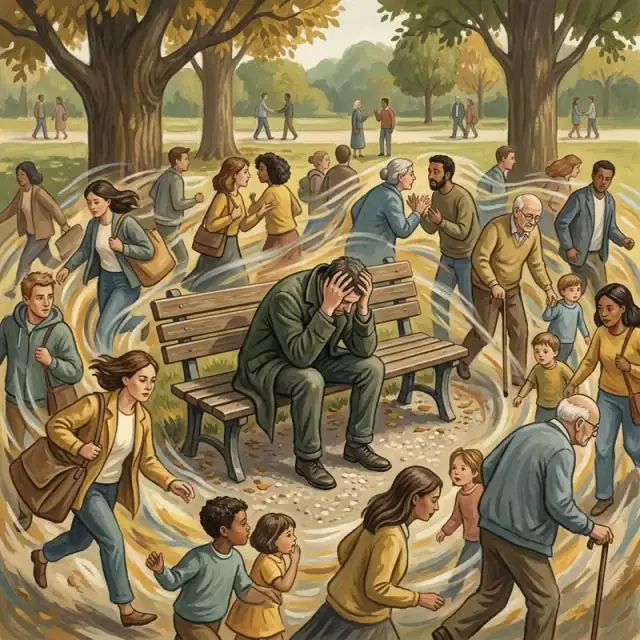
An adult sits slumped on a park bench, head in hands, disconnected from the chaotic flow of people around them.
The deep, heavy posture of the adult represents the compulsive, repetitive focus on internal burdens, showing how one can become trapped in a cycle of distressing thoughts even amidst activity.
Image credit: Wordspun · AI-generated conceptual illustration