Parasocial
adjective /ˌparəˈsəʊʃ(ə)l/ — A one-sided relationship felt as genuinely mutual.
Definition
Describing a relationship in which one party extends emotional energy, interest, and time while the other party is unaware of their existence — the relationship an audience member feels toward a celebrity, podcaster, or streamer who feels like a friend without the reciprocity of real friendship.
Beyond the definition
Parasocial relationships are one of the most interesting products of the media age. They feel real — the warmth is genuine, the interest is real — but they are structurally one-sided. Understanding this does not necessarily diminish the value of the connection, but it clarifies what it is and is not.
Origin & history
From Greek para (beside, beyond) + social. Coined in 1956 by sociologists Donald Horton and Richard Wohl to describe the relationships television audiences formed with on-screen personalities.
Example sentences
Illustrative sentences for learning, not verified community posts or sourced quotations.
She had a parasocial relationship with the podcast host — she knew everything about their life; they did not know she existed.
The parasocial relationship becomes problematic when it substitutes for rather than supplements real connection.
Creators who understand parasocial dynamics can build enormous loyalty without anyone meeting anyone.
How to use it
This entry uses an adjective. Follow the examples for the nouns it describes and its position in the sentence.
Choose “Parasocial” when the meaning fits your context: Describing a relationship in which one party extends emotional energy, interest, and time while the other party is unaware of their existence — the relationship an audience member feels toward a celebrity, podcaster, or streamer who feels like a friend without the reciprocity of real friendship.
Synonyms
one-sided connection, fan relationship
Antonyms
reciprocal relationship, mutual friendship
Related words
Parasocial vs fan
A fan appreciates a creator from a distance, whereas a parasocial relationship involves an illusory sense of intimacy where the viewer feels they truly know the media figure personally.
Word in the Wild
See how this word appears in life, language and stories.
Illustrative sentences and imagined stories for learning — not verified sightings, interviews, or sourced quotations.
Fictional scene
One-Sided Reflection and Mimicry
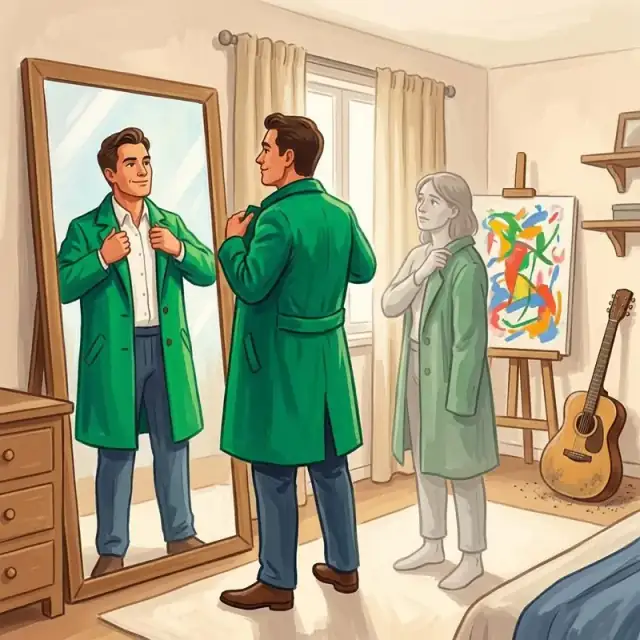
One adult chooses a coat in a mirror while their partner copies the outfit and posture.
The dynamic of the second person looking at the first for cues illustrates the imbalance of a parasocial relationship. One party is active and self-directed, while the other projects interest into a figure who is unaware of their individual existence.
Image credit: Wordspun · AI-generated conceptual illustration
Questions about this word
What does "Parasocial" mean?
Parasocial is adjective meaning: A one-sided relationship felt as genuinely mutual.. Describing a relationship in which one party extends emotional energy, interest, and time while the other party is unaware of their existence — the relationship an audience member feels toward a celebrity, podcaster, or streamer who feels like a friend without the reciprocity of real friendship.
Where does the word "Parasocial" come from?
From Greek para (beside, beyond) + social. Coined in 1956 by sociologists Donald Horton and Richard Wohl to describe the relationships television audiences formed with on-screen personalities.