Nocturne
noun /ˈnɒktɜːn/ — A composition, painting, or piece evoking the mood and beauty of night.
Definition
In music, a composition of a dreamy or pensive character suited to the night — a form made famous by Chopin. More broadly, any work of art that conjures the particular quality of nighttime: its silence, mystery, and invitation to reflection.
Beyond the definition
Chopin's nocturnes sound like what night feels like to someone awake and listening — the world quieter, the mind wider, time moving differently. A nocturne is art that understands that the night is its own country.
Origin & history
French 'nocturne,' from Latin 'nocturnus' (of the night), from 'nox/noctis' (night). The musical form was popularised by Irish composer John Field in the early 19th century and perfected by Chopin.
Example sentences
Illustrative sentences for learning, not verified community posts or sourced quotations.
She listened to nocturnes when the insomnia came — the music met her where she was.
He painted nocturnes of the city: empty streets, sodium light, a world between shifts.
There is a nocturne quality to certain conversations — those that only happen in the dark.
Synonyms
night piece, nocturnal composition, serenade
Antonyms
aubade, morning piece
Related words
Compare this word
Word in the Wild
See how this word appears in life, language and stories.
Illustrative sentences and imagined stories for learning — not verified sightings, interviews, or sourced quotations.
Fictional scene
Shadowed Garden Anticipation
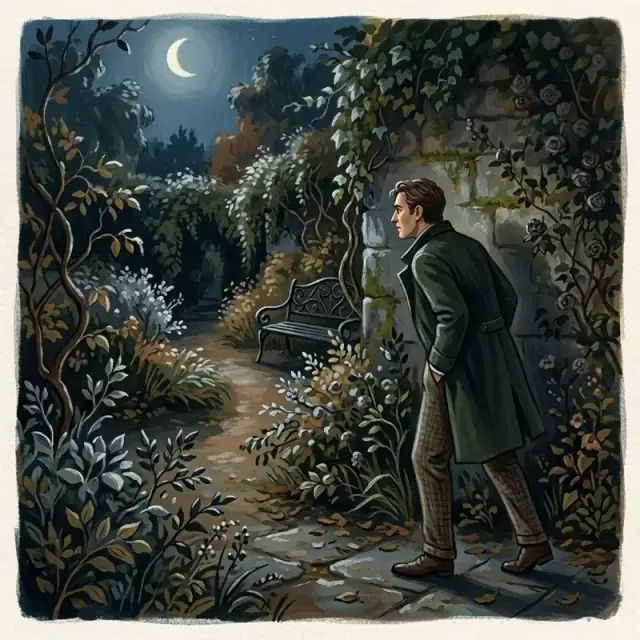
An adult stands in the shadowed corner of a moonlit garden, waiting for someone to arrive in the quiet and mystery of the night.
The moonlit, quiet garden captures the essence of a nocturne. It is a space of mystery and invitation to reflection, where the silence and the shadows invite the anticipation of a secret meeting, echoing the dreamy, pensive character of music meant for the night.
Image credit: Wordspun · AI-generated conceptual illustration