Leitmotif
noun /ˈlʌɪtməʊtiːf/ — A recurring musical theme representing a person, idea, or emotion.
Definition
A recurring theme associated throughout a musical composition with a particular person, place, or idea; by extension, a recurrent theme in a literary or cinematic work.
Beyond the definition
Wagner invented the leitmotif as a musical memory system — you hear a few notes and instantly know who has entered, who is being thought of, what is at stake. The technique became the grammar of film scoring: John Williams's two-note shark, the Imperial March. A shorthand for identity written in sound.
Origin & history
German: Leit (leading) + Motiv (motive, theme). Coined in the 19th century in discussions of Wagner's operas, where recurring melodic fragments served as musical signatures for characters and themes.
Example sentences
Illustrative sentences for learning, not verified community posts or sourced quotations.
Darth Vader's leitmotif — the Imperial March — announces him before he appears.
The director's use of a leitmotif let the music tell the audience what to feel before they saw it.
Loss had become the leitmotif of the decade — the theme that played under everything else.
Synonyms
recurring theme, motif, signature melody
Related words
Compare this word
Word in the Wild
See how this word appears in life, language and stories.
Illustrative sentences and imagined stories for learning — not verified sightings, interviews, or sourced quotations.
Fictional scene
Stone griffin guarding bridge
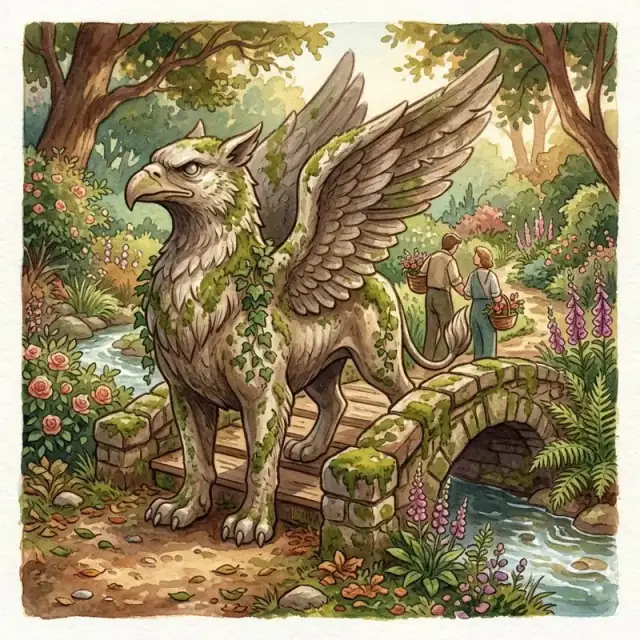
A weathered, stone griffin statue guards a bridge, its familiar, combined form representing a recurring symbolic presence.
The griffin serves as a constant, recurring visual figure in the garden scene, analogous to a theme or idea that reappears to signify a particular meaning throughout a narrative or composition.
Image credit: Wordspun · AI-generated conceptual illustration