Languishing
noun / verb /ˈlæŋɡwɪʃɪŋ/ — Existing without vitality — not depressed, not flourishing, but neither.
Definition
The state of drifting through life without purpose or energy — not clinical depression, but not healthy flourishing either. The sensation of seeing life through a foggy windshield, of being neither sick nor well but simply absent of momentum.
Beyond the definition
Adam Grant's 2021 essay on languishing resonated because it named something millions had been experiencing without a word for it. The pandemic sharpened it, but the condition is older: life in the middle distance, the loss of enthusiasm for things that used to matter.
Origin & history
From Latin 'languere' (to be weak, tired), through French 'languir.' Related to 'languid' (slow, lacking energy) — both from the same root of flagging vitality.
Example sentences
Illustrative sentences for learning, not verified community posts or sourced quotations.
She'd been languishing since February — not unhappy, just not quite present.
The project languished on the to-do list, neither abandoned nor pursued.
Languishing is the emotion no one had a word for, and then suddenly everyone did.
Synonyms
stagnating, fading, drifting, declining
Antonyms
flourishing, thriving, energised
Related words
Word in the Wild
See how this word appears in life, language and stories.
Illustrative sentences and imagined stories for learning — not verified sightings, interviews, or sourced quotations.
Fictional scene
Old chair reclaimed by forest
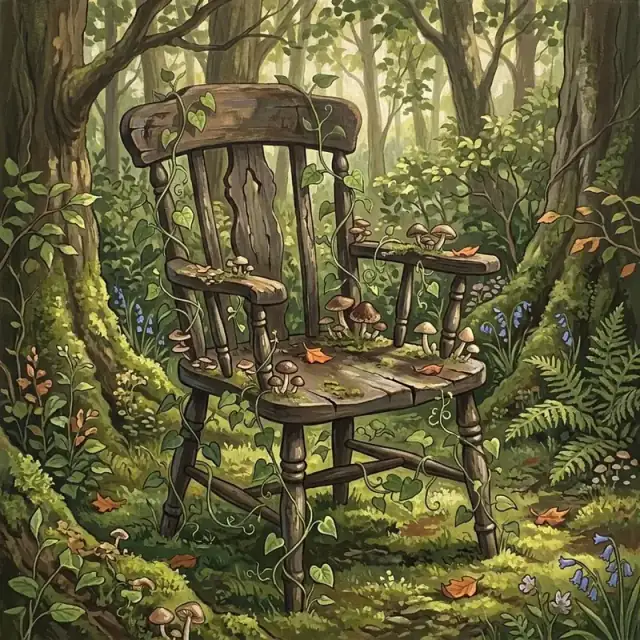
An old wooden chair sits on the forest floor, with mushrooms and vines growing over it in soft light.
The chair’s slow, dignified deterioration represents a state of languishing—it is no longer functional, yet it remains in existence, drifting back into the earth. It captures the sensation of a loss of momentum, existing without purpose, caught in a foggy, transitional state.
Image credit: Wordspun · AI-generated conceptual illustration