Invasive
adjective /ɪnˈveɪ.sɪv/ — Spreading proliferatingly in a new area; not native to an environment.
Definition
Tending to spread prolifically and undesirably in a new environment, often crowding out native species. Also: (of medical procedures) involving incision or the introduction of instruments into the body. The invasive species thrives in its new home by escaping the pressures that controlled it elsewhere.
Beyond the definition
The invasive species is not malevolent — it is simply in the wrong context, without its natural predators, without the competitors that kept it in check. Success becomes damage when the controlling systems are absent.
Origin & history
Latin: 'invadere' (to go into, to attack). From 'in' (into) + 'vadere' (to go). Related to 'invasion', 'invade'. The ecological sense developed in the 20th century as habitat disruption became a major concern.
Example sentences
Illustrative sentences for learning, not verified community posts or sourced quotations.
Japanese knotweed is invasive in Britain — growing without the insects and diseases that control it in Japan.
His thoughts were invasive: he couldn't stop them returning to the conversation, rerunning it endlessly.
Technology companies have been invasive in ways that are only now becoming clear.
How to use it
This entry uses an adjective. Follow the examples for the nouns it describes and its position in the sentence.
Choose “Invasive” when the meaning fits your context: Tending to spread prolifically and undesirably in a new environment, often crowding out native species. Also: (of medical procedures) involving incision or the introduction of instruments into the body. The invasive species thrives in its new home by escaping the pressures that controlled it elsewhere.
Synonyms
introduced, non-native, spreading, intrusive
Antonyms
endemic, native, controlled
Related words
Invasive vs non-native
Non-native species simply exist outside their range. Invasive species are those that spread aggressively and cause ecological or economic harm.
Word in the Wild
See how this word appears in life, language and stories.
Illustrative sentences and imagined stories for learning — not verified sightings, interviews, or sourced quotations.
Fictional scene
Plant Growing Through Marble Crack
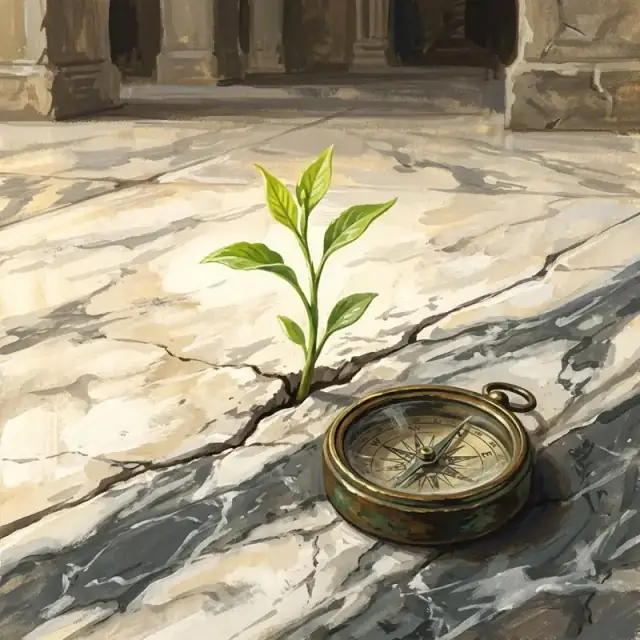
A vibrant green shoot grows through a jagged crack in a marble floor, with a tarnished compass nearby, contrasting with the man-made stone.
The plant is invasive to the marble, spreading into a space where it is not naturally intended to be. By thriving in this new environment and crowding out the stillness of the stone, it illustrates the invasive capacity to escape the pressures that control growth elsewhere.
Image credit: Wordspun · AI-generated conceptual illustration
Questions about this word
What does "Invasive" mean?
Invasive is adjective meaning: Spreading proliferatingly in a new area; not native to an environment.. Tending to spread prolifically and undesirably in a new environment, often crowding out native species. Also: (of medical procedures) involving incision or the introduction of instruments into the body. The invasive species thrives in its new home by escaping the pressures that controlled it elsewhere.
Where does the word "Invasive" come from?
Latin: 'invadere' (to go into, to attack). From 'in' (into) + 'vadere' (to go). Related to 'invasion', 'invade'. The ecological sense developed in the 20th century as habitat disruption became a major concern.