Ineffable
adjective /ɪˈnɛfəb(ə)l/ — Too beautiful or intense to be expressed in words.
Definition
Too great or extreme to be expressed or described in words; transcending ordinary language — sometimes used specifically for what is too sacred to speak.
Beyond the definition
Ineffable is the word for the experience that defeats vocabulary — the feeling that is real and complete but for which no word exists; the beauty that is so actual that describing it diminishes it. It is the philosopher's honest admission: some things are beyond language.
Origin & history
From Old French ineffable or directly from Latin ineffabilis, 'unutterable': in- ('not') + effabilis ('speakable'), from effari ('to utter'). Recorded in English in the late 14th century.
Example sentences
Illustrative sentences for learning, not verified community posts or sourced quotations.
The view from the summit had an ineffable quality — photographs captured the details but not the feeling.
Love at its most intense becomes ineffable — you can name it, but naming it does nothing.
She was searching for the ineffable and finding instead only the very large.
How to use it
Use ineffable for something that cannot be expressed in words. It can describe joy, beauty, or disgust; it is not restricted to holiness or pleasant feelings.
Illustrative example: “He felt an ineffable joy when he heard the news.”
Synonyms
indescribable, inexpressible, unspeakable, transcendent
Antonyms
expressible, articulable, describable
Related words
Ineffable vs indescribable
Ineffable and indescribable overlap in meaning: beyond expression in words. Ineffable often has a literary tone, but it is not restricted to sublime or holy things; it can describe disgust as well as joy. It also has a distinct sense of something not to be uttered, such as a sacred name. Indescribable is a more general alternative.
Word in the Wild
See how this word appears in life, language and stories.
Illustrative sentences and imagined stories for learning — not verified sightings, interviews, or sourced quotations.
Fictional scene
Solitary Quietude in Dim Room
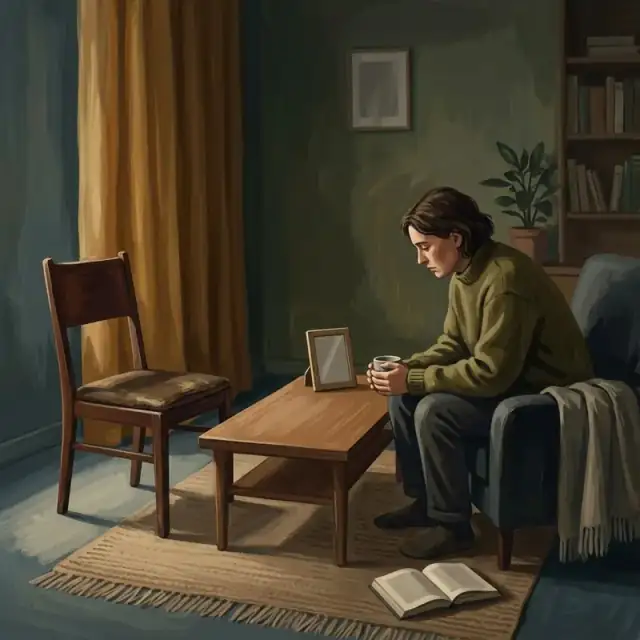
An adult sits alone in a dark room, head slightly bowed while staring towards an empty, shadowed chair in silence.
The profound stillness and somber lighting depict an emotional state so heavy that it exists beyond the utility of verbal communication. The image captures the internal weight of grief, which often transcends the capacity of ordinary language to articulate or define its intensity.
Image credit: Wordspun · AI-generated conceptual illustration