Individuation
noun /ˌɪn.dɪ.vɪdʒ.uˈeɪ.ʃən/ — Jung's term for the lifelong process of becoming fully, authentically oneself
Definition
In Jungian psychology, the process of integrating all parts of the self — conscious and unconscious, shadow and light — into a coherent, authentic whole. The becoming of who one truly is, rather than who one was expected to be.
Beyond the definition
The longest journey is inward. Individuation is not self-improvement in the conventional sense — it is not becoming better but becoming whole. It asks you to integrate the parts you have hidden, the instincts you have disowned, the shadow you have cast.
Origin & history
From Latin 'individuare' (to make individual) — from 'individuus' (indivisible). Developed as a psychological concept by Carl Jung to describe the central process of human psychological development. The paradox: to individuate is to become more fully yourself, but also more fully connected to the universal.
Example sentences
Illustrative sentences for learning, not verified community posts or sourced quotations.
Jung believed individuation was the purpose of the second half of life — the work of integrating rather than achieving.
The process of individuation is never comfortable: it requires meeting the parts of yourself you have most carefully avoided.
Midlife crises are often failed individuation — the self demanding its wholeness without the vocabulary to ask for it properly.
Synonyms
self-realisation, integration, self-becoming, wholeness
Antonyms
conformity, fragmentation, persona-wearing
Related words
Word in the Wild
See how this word appears in life, language and stories.
Illustrative sentences and imagined stories for learning — not verified sightings, interviews, or sourced quotations.
Fictional scene
Debate Over Conflicting Ideas
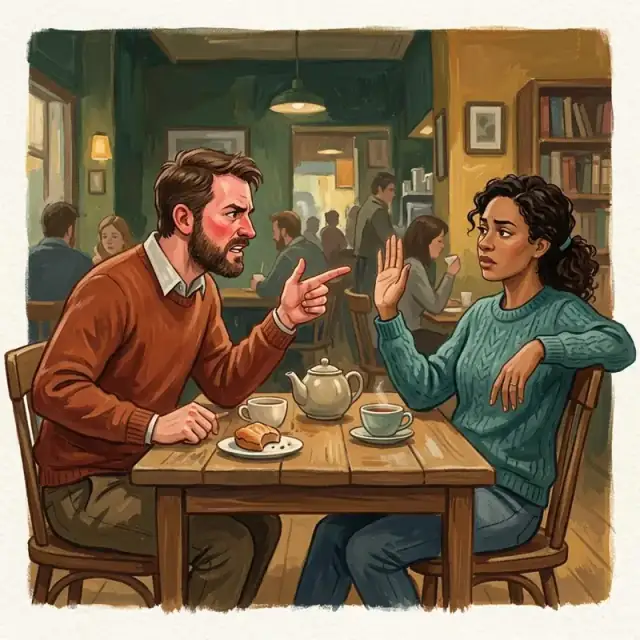
Two people have a heated, serious debate while sitting at a table, their facial expressions and distance clearly marking the intensity of their disagreement.
Individuation involves integrating the different parts of the self, including the shadow. The open conflict shown here represents the necessary process of confronting and working through opposing ideas and reactions to reach a more authentic, coherent understanding, mirroring the psychological effort of becoming one's true self.
Image credit: Wordspun · AI-generated conceptual illustration