Feral
adjective /ˈfɪər.əl/ — Wild, especially after escaping from captivity or domestication.
Definition
In a wild state, especially after escape from captivity or domestication. The feral animal was once domestic and has returned to wildness — a reversal of the domestication process. Feral children — raised without human contact — are the most disturbing example.
Beyond the definition
Feral carries something of the uncanny — the domestic creature returned to wildness. The feral cat that once sat on a lap. The language that is half-remembered and half-forgotten. Feral is civilisation's ghost.
Origin & history
Latin: 'fera' (wild animal). From 'ferus' (wild). Related to 'fierce', 'ferocious'. The sense of 'formerly domestic, now wild' developed in English in the 17th century.
Example sentences
Illustrative sentences for learning, not verified community posts or sourced quotations.
The feral cats lived in the alley in a complex social structure that had nothing to do with humans.
There was something feral in her grief — raw, undomesticated, impossible to manage.
The garden had gone feral in their absence: the cultivated plants overgrown by wild ones.
How to use it
This entry uses an adjective. Follow the examples for the nouns it describes and its position in the sentence.
Choose “Feral” when the meaning fits your context: In a wild state, especially after escape from captivity or domestication. The feral animal was once domestic and has returned to wildness — a reversal of the domestication process. Feral children — raised without human contact — are the most disturbing example.
Synonyms
wild, untamed, feral, savage
Antonyms
domestic, tame, civilised
Related words
Feral vs wild
Wild animals are born and raised in nature. Feral animals are descendants of domestic animals that have returned to a wild state.
Word in the Wild
See how this word appears in life, language and stories.
Illustrative sentences and imagined stories for learning — not verified sightings, interviews, or sourced quotations.
Fictional scene
Tree Cycles of Bare and Budding
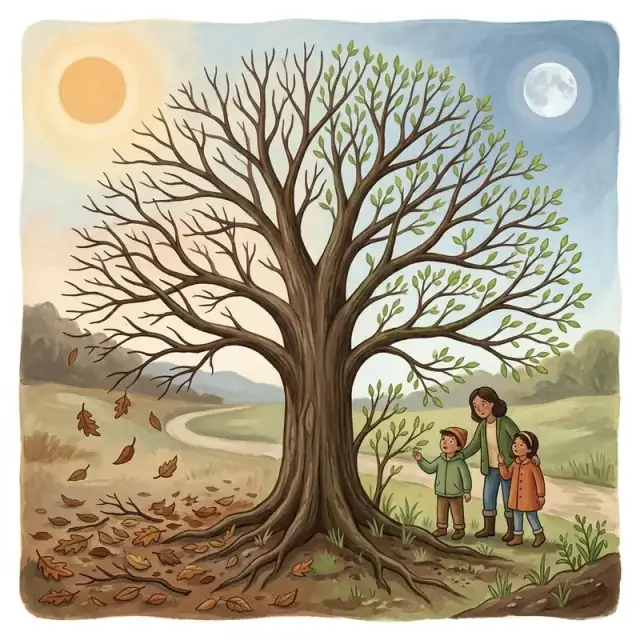
A tree showing bare twigs on one side and budding green leaves on another, representing the cycle of change under sunlight and moonlight.
The tree's transition from bareness to budding represents the feral state as a reversal of human-controlled development. Like an animal returning to the wild, the tree's natural progression back to budding green growth despite previous dormancy illustrates a return to a wild, undomesticated state.
Image credit: Wordspun · AI-generated conceptual illustration
Questions about this word
What does "Feral" mean?
Feral is adjective meaning: Wild, especially after escaping from captivity or domestication.. In a wild state, especially after escape from captivity or domestication. The feral animal was once domestic and has returned to wildness — a reversal of the domestication process. Feral children — raised without human contact — are the most disturbing example.
Where does the word "Feral" come from?
Latin: 'fera' (wild animal). From 'ferus' (wild). Related to 'fierce', 'ferocious'. The sense of 'formerly domestic, now wild' developed in English in the 17th century.