Fatalism
noun /ˈfeɪ.tə.lɪ.z(ə)m/ — The belief that events are fated and inevitable
Definition
The belief that all events are predetermined by fate and therefore inevitable — and that resistance or effort is ultimately futile in the face of what is destined to happen.
Beyond the definition
The philosophy of letting go — sometimes into peace, sometimes into passivity. The fatalist does not rage against what cannot be changed; the question is whether anything can actually be changed.
Origin & history
From Latin 'fatum' (fate, what has been spoken) — from 'fari' (to speak). What the gods have spoken. The spoken destiny.
Example sentences
Illustrative sentences for learning, not verified community posts or sourced quotations.
He had a fatalism about his health that allowed him to approach illness with a calm that puzzled his doctors.
Fatalism is often confused with pessimism — but the fatalist is not necessarily sad, just convinced that outcomes are determined.
There is a comforting fatalism available at certain moments: everything that was meant to happen has happened.
How to use it
This entry uses a noun. Follow the examples for articles and singular or plural forms; not every noun takes “a” or “an.”
Choose “Fatalism” when the meaning fits your context: The belief that all events are predetermined by fate and therefore inevitable — and that resistance or effort is ultimately futile in the face of what is destined to happen.
Synonyms
predestination, determinism, resignation, inevitabilism
Antonyms
free will, agency, voluntarism
Related words
Fatalism vs determinism
Fatalism implies that the end result is fixed by destiny. Determinism focuses on the chain of cause and effect, implying that our actions are part of an unbroken causal series.
Compare this word
Word in the Wild
See how this word appears in life, language and stories.
Illustrative sentences and imagined stories for learning — not verified sightings, interviews, or sourced quotations.
Fictional scene
Guardian at Maze Entrance
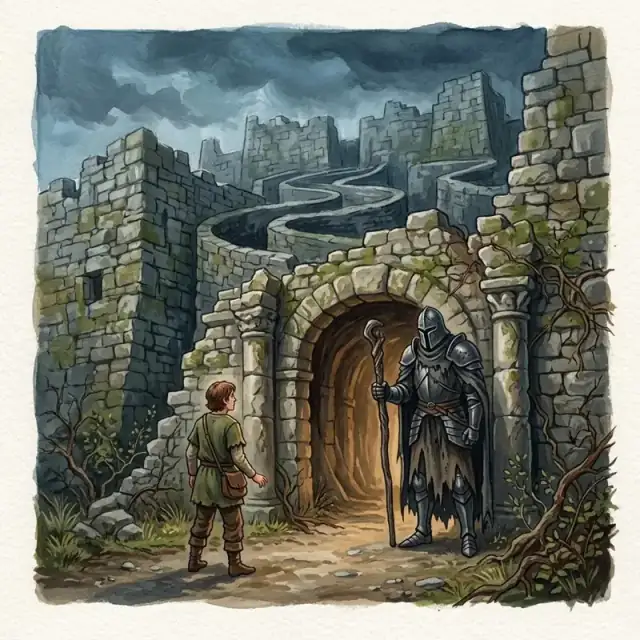
A dark, imposing guardian stands at the entrance of a towering stone maze, representing an inescapable trial.
The presence of the guardian and the complexity of the maze imply that resistance is futile and the outcome is predetermined, capturing the core belief of fatalism.
Image credit: Wordspun · AI-generated conceptual illustration
Questions about this word
What does "Fatalism" mean?
Fatalism is noun meaning: The belief that events are fated and inevitable. The belief that all events are predetermined by fate and therefore inevitable — and that resistance or effort is ultimately futile in the face of what is destined to happen.
Where does the word "Fatalism" come from?
From Latin 'fatum' (fate, what has been spoken) — from 'fari' (to speak). What the gods have spoken. The spoken destiny.