Emptiness
noun /ˈɛmptɪnɪs/ — The state of containing nothing — and the interior version, when what you valued has left.
Definition
The state of containing nothing; lacking meaning, substance, or value; the quality of being without feeling, purpose, or substance; in Buddhist philosophy, the absence of inherent existence.
Beyond the definition
Emptiness is the grief word for what remains after absence — not fullness of sorrow but its opposite: a void where something was. The Buddhist tradition makes emptiness (śūnyatā) the foundation of understanding; the ordinary sense makes it the word for loss.
Origin & history
From Old English æmtig — at leisure, not occupied (from æmetta: leisure). Unoccupied — the empty thing is not filled, not engaged. Emptiness as the unoccupied state of what should be otherwise.
Example sentences
Illustrative sentences for learning, not verified community posts or sourced quotations.
The emptiness was specific — she was missing the noise of him in the morning, the sounds that had been background and were now conspicuous by absence.
He filled the emptiness with activity, which worked until he stopped.
Emptiness is not neutral; it has a shape that matches what is gone.
How to use it
This entry uses a noun. Follow the examples for articles and singular or plural forms; not every noun takes “a” or “an.”
Choose “Emptiness” when the meaning fits your context: The state of containing nothing; lacking meaning, substance, or value; the quality of being without feeling, purpose, or substance; in Buddhist philosophy, the absence of inherent existence.
Synonyms
Antonyms
fullness, substance, meaning
Related words
Word in the Wild
See how this word appears in life, language and stories.
Illustrative sentences and imagined stories for learning — not verified sightings, interviews, or sourced quotations.
Fictional scene
Minimalist Room and Landscape
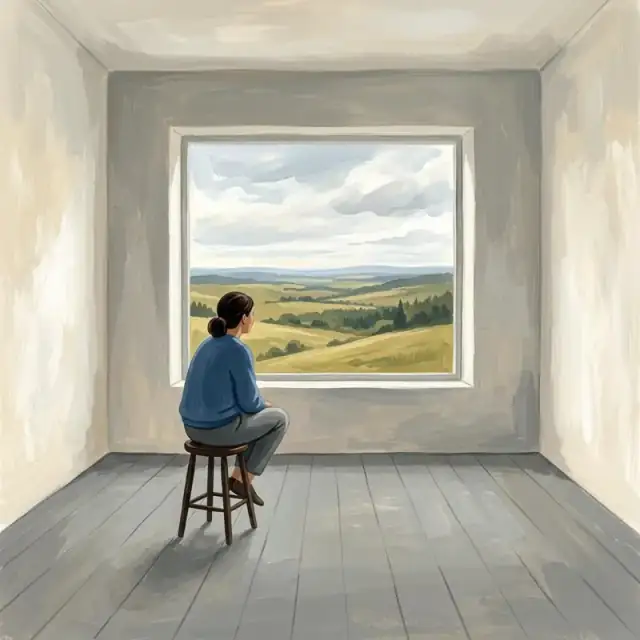
An adult sits alone in a large, empty room with minimal furniture, gazing at an open landscape through a window.
The vast, sparsely furnished room represents emptiness, both as a physical state and a psychological condition. It visualizes the absence of purpose, substance, or others, creating a space where the feeling of containing nothingness becomes the defining, unsettling characteristic of the environment.
Image credit: Wordspun · AI-generated conceptual illustration
Questions about this word
What does "Emptiness" mean?
Emptiness is noun meaning: The state of containing nothing — and the interior version, when what you valued has left.. The state of containing nothing; lacking meaning, substance, or value; the quality of being without feeling, purpose, or substance; in Buddhist philosophy, the absence of inherent existence.
Where does the word "Emptiness" come from?
From Old English æmtig — at leisure, not occupied (from æmetta: leisure). Unoccupied — the empty thing is not filled, not engaged. Emptiness as the unoccupied state of what should be otherwise.