Dragon
noun /ˈdræɡən/ — The fire-breathing guardian of treasure — mythology's image of power, danger, and the thing worth fighting for.
Definition
A large, serpentine, mythical creature that appears in the folklore of many cultures, typically depicted as breathing fire and guarding treasure; also, a fierce, intimidating person.
Beyond the definition
The dragon is mythology's most universal archetype — it appears across cultures in remarkably similar forms. Every dragon guards something. Every hero must face one. The dragon isn't just the obstacle; it's the signal that what lies beyond is worth having.
Origin & history
From Greek drakon — serpent, dragon (from drak-: a root meaning to see sharply). The one who sees — the all-seeing serpent. Dragons are watchers before they are fighters.
Example sentences
Illustrative sentences for learning, not verified community posts or sourced quotations.
She'd been avoiding the dragon for years — the creative project she was too afraid to begin.
Every organization has its dragon: the one person or system that everything important must pass through.
The hero doesn't kill the dragon to prove strength; they kill it to claim what the dragon has been keeping from them.
How to use it
This entry uses a noun. Follow the examples for articles and singular or plural forms; not every noun takes “a” or “an.”
Choose “Dragon” when the meaning fits your context: A large, serpentine, mythical creature that appears in the folklore of many cultures, typically depicted as breathing fire and guarding treasure; also, a fierce, intimidating person.
Synonyms
beast, serpent, monster, wyvern
Antonyms
innocent, harmless creature
Related words
Word in the Wild
See how this word appears in life, language and stories.
Illustrative sentences and imagined stories for learning — not verified sightings, interviews, or sourced quotations.
Fictional scene
Griffin statue guarding a bridge
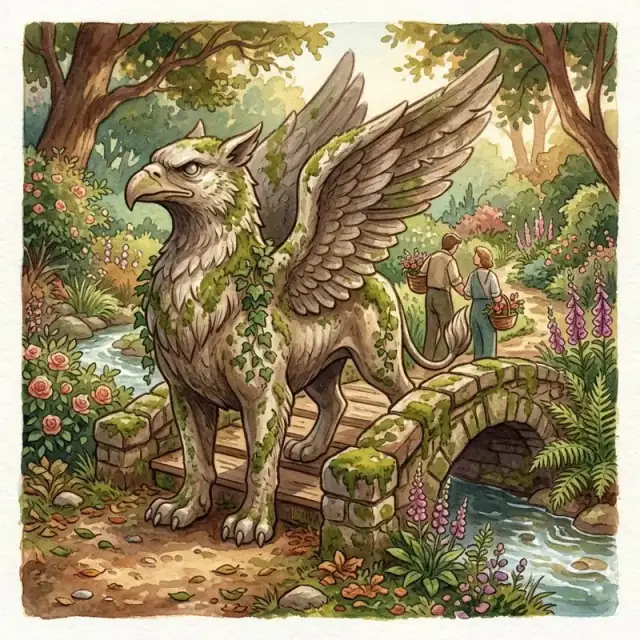
A stone griffin statue with eagle and lion features sits near a garden bridge, watching over the entrance.
The griffin is an intimidating, mythical guardian. It conceptually represents a dragon—a fierce figure that oversees and protects a treasure or a specific, defended territory.
Image credit: Wordspun · AI-generated conceptual illustration
Questions about this word
What does "Dragon" mean?
Dragon is noun meaning: The fire-breathing guardian of treasure — mythology's image of power, danger, and the thing worth fighting for.. A large, serpentine, mythical creature that appears in the folklore of many cultures, typically depicted as breathing fire and guarding treasure; also, a fierce, intimidating person.
Where does the word "Dragon" come from?
From Greek drakon — serpent, dragon (from drak-: a root meaning to see sharply). The one who sees — the all-seeing serpent. Dragons are watchers before they are fighters.