Code-Switching
noun /kəʊd ˈswɪtʃɪŋ/ — Shifting between languages or dialects based on context.
Definition
The practice of alternating between two or more languages or dialects in conversation, or adapting one's style of speech to fit the social context; shifting linguistic register to match audience or environment.
Beyond the definition
Code-switching is a daily performance that many people do without noticing and others do with enormous skill and effort. The person who switches from patois to formal English at a job interview, from professional register to family dialect at dinner — the code is not just language but identity.
Origin & history
A concept from sociolinguistics, coined in the 1950s by Einar Haugen. Code in this context refers to any language or variety of language. Code-switching was initially studied in bilingual communities but has expanded to include register-switching within a single language.
Example sentences
Illustrative sentences for learning, not verified community posts or sourced quotations.
She code-switched effortlessly — boardroom English with colleagues, something entirely different at home.
Code-switching is not inauthentic; it is the normal operation of a socially fluent person.
The academic study of code-switching revealed how much work many people do simply to be heard in the right register.
How to use it
This entry uses a noun. Follow the examples for articles and singular or plural forms; not every noun takes “a” or “an.”
Choose “Code-Switching” when the meaning fits your context: The practice of alternating between two or more languages or dialects in conversation, or adapting one's style of speech to fit the social context; shifting linguistic register to match audience or environment.
Synonyms
register shifting, language alternation, dialect switching
Antonyms
monolingualism, fixed register
Related words
Word in the Wild
See how this word appears in life, language and stories.
Illustrative sentences and imagined stories for learning — not verified sightings, interviews, or sourced quotations.
Fictional scene
Relaxed Chat in Local Cafe
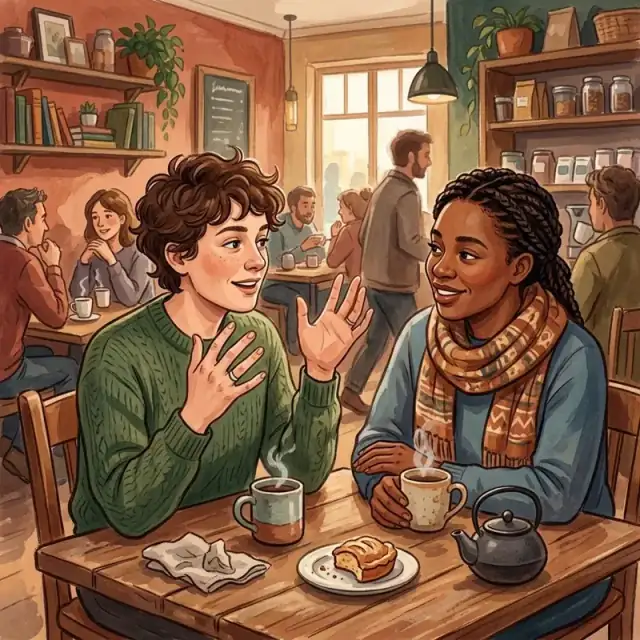
An adult speaks with their hands in a warm cafe, their expressions and gestures showing comfort within their community.
The adult’s natural, genuine speech in the café setting illustrates code-switching. They are adapting their linguistic register and style of speech to fit the social context, shifting into the comfortable, local voice that matches their immediate audience and environment.
Image credit: Wordspun · AI-generated conceptual illustration
Questions about this word
What does "Code-Switching" mean?
Code-Switching is noun meaning: Shifting between languages or dialects based on context.. The practice of alternating between two or more languages or dialects in conversation, or adapting one's style of speech to fit the social context; shifting linguistic register to match audience or environment.
Where does the word "Code-Switching" come from?
A concept from sociolinguistics, coined in the 1950s by Einar Haugen. Code in this context refers to any language or variety of language. Code-switching was initially studied in bilingual communities but has expanded to include register-switching within a single language.