Cliché
noun /kliːˈʃeɪ/ — An overused expression that has lost its power.
Definition
A phrase or expression that has become so overused it has lost its original power, freshness, or meaning. Clichés were once original — every tired metaphor was once a fresh one. They become clichés through the tribute of repetition.
Beyond the definition
A cliché is a truth that has been used too many times — worn smooth by handling until it can no longer grip. The feeling it describes is still real; the expression no longer carries it effectively.
Origin & history
French: from 'clicher' (to stereotype, to click) — from the sound made by a printing plate being dropped into metal. A cliché was literally a stereotype plate — a fixed image reproduced mechanically without thought.
Example sentences
Illustrative sentences for learning, not verified community posts or sourced quotations.
Every cliché was once a metaphor that someone thought was vividly original — 'at the end of the day' began as something someone said with intention.
Avoid clichés like the plague — the instruction itself has become a cliché.
She used clichés deliberately sometimes, knowing that the right context could rehabilitate a worn phrase.
How to use it
This entry uses a noun. Follow the examples for articles and singular or plural forms; not every noun takes “a” or “an.”
Choose “Cliché” when the meaning fits your context: A phrase or expression that has become so overused it has lost its original power, freshness, or meaning. Clichés were once original — every tired metaphor was once a fresh one. They become clichés through the tribute of repetition.
Synonyms
platitude, stock phrase, hackneyed expression
Antonyms
fresh metaphor, original expression
Related words
Cliché vs platitude
Cliché usually refers to a stale expression or plot element in storytelling. Platitude refers to a moralizing, unoriginal sentiment meant to offer comfort but failing due to banality.
Compare this word
Word in the Wild
See how this word appears in life, language and stories.
Illustrative sentences and imagined stories for learning — not verified sightings, interviews, or sourced quotations.
Fictional scene
Dignified Yet Tired Remains
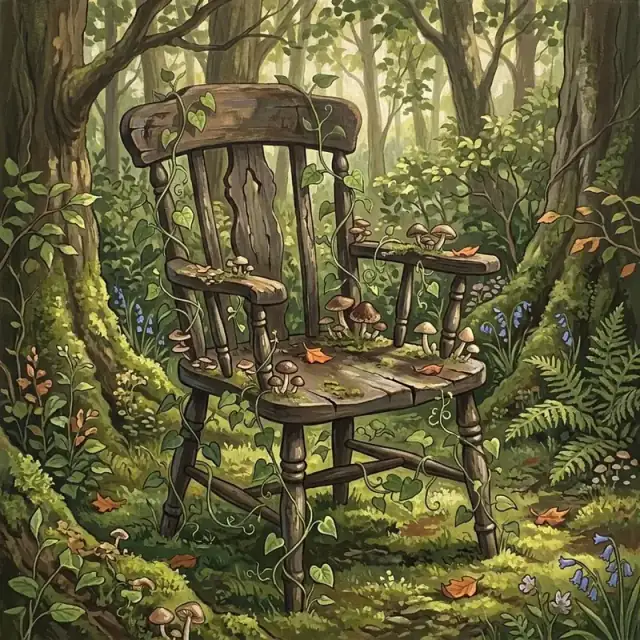
An old chair slowly returns to the earth, covered in vines and mushrooms.
The chair, once a fresh, functional object, is now a worn-out relic. This reflects the life cycle of a cliché: a phrase that was once an original, vivid metaphor but has lost its freshness through repeated use.
Image credit: Wordspun · AI-generated conceptual illustration
Questions about this word
What does "Cliché" mean?
Cliché is noun meaning: An overused expression that has lost its power.. A phrase or expression that has become so overused it has lost its original power, freshness, or meaning. Clichés were once original — every tired metaphor was once a fresh one. They become clichés through the tribute of repetition.
Where does the word "Cliché" come from?
French: from 'clicher' (to stereotype, to click) — from the sound made by a printing plate being dropped into metal. A cliché was literally a stereotype plate — a fixed image reproduced mechanically without thought.