Caveat Emptor
phrase /ˌkæv.i.æt ˈɛmp.tɔːr/ — Let the buyer beware — the buyer is responsible for checking quality
Definition
The principle that the buyer alone is responsible for checking the quality and suitability of a purchase before completing the transaction. In the absence of any warranty or guarantee, the risk falls entirely on the buyer.
Beyond the definition
Caveat emptor is ancient wisdom about the gap between what is promised and what is delivered. It's the market's honest disclaimer: no one is looking out for you here. You must look out for yourself.
Origin & history
Latin: 'let the buyer beware'. A maxim of Roman law that has governed commercial transactions for centuries. In modern consumer law, various protections have reduced its force — but it remains the baseline.
Example sentences
Illustrative sentences for learning, not verified community posts or sourced quotations.
The car was sold as is. Caveat emptor — he should have had it inspected.
Consumer protection law has modified caveat emptor, but in private sales it often still applies.
Caveat emptor is why due diligence exists — to protect the buyer from their own optimism.
How to use it
Follow this entry’s examples for grammatical form and sentence placement.
Choose “Caveat Emptor” when the meaning fits your context: The principle that the buyer alone is responsible for checking the quality and suitability of a purchase before completing the transaction. In the absence of any warranty or guarantee, the risk falls entirely on the buyer.
Synonyms
buyer beware, at the buyer's risk, no guarantee
Antonyms
warranty, guarantee, consumer protection
Related words
Caveat Emptor vs caveat venditor
Caveat emptor places the burden of quality assessment on the buyer. Caveat venditor places the burden on the seller to provide a quality product.
Word in the Wild
See how this word appears in life, language and stories.
Illustrative sentences and imagined stories for learning — not verified sightings, interviews, or sourced quotations.
Fictional scene
Negotiating at Produce Stall
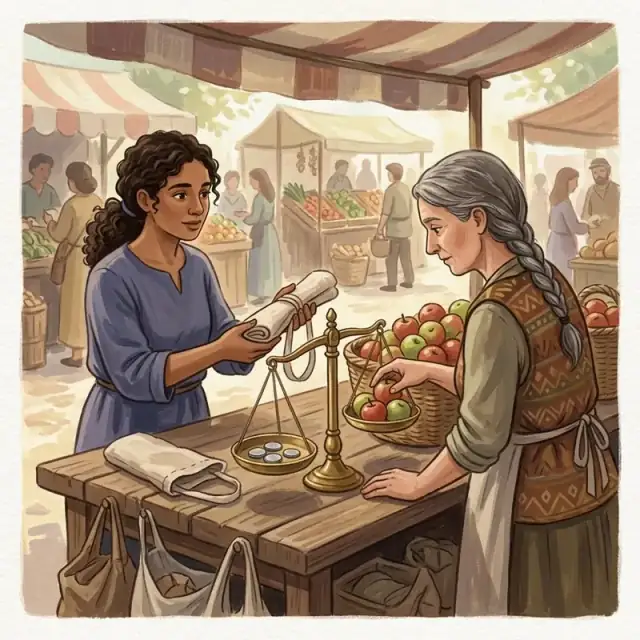
Two adults negotiate at a small produce stall, with scales, apples, and unmarked coins to make the exchange visible.
The buyer must verify the quality of the fruit themselves before finalizing the coins' transfer. Caveat emptor places the risk entirely on the buyer, mandating they inspect the goods before the transaction concludes without guarantee.
Image credit: Wordspun · AI-generated conceptual illustration
Questions about this word
What does "Caveat Emptor" mean?
Caveat Emptor is phrase meaning: Let the buyer beware — the buyer is responsible for checking quality. The principle that the buyer alone is responsible for checking the quality and suitability of a purchase before completing the transaction. In the absence of any warranty or guarantee, the risk falls entirely on the buyer.
Where does the word "Caveat Emptor" come from?
Latin: 'let the buyer beware'. A maxim of Roman law that has governed commercial transactions for centuries. In modern consumer law, various protections have reduced its force — but it remains the baseline.