Capricious
adjective /kəˈprɪʃəs/ — Given to sudden, unpredictable changes of mood or behaviour.
Definition
Changing mood or behaviour suddenly and unexpectedly; governed by impulse rather than reason.
Beyond the definition
Capricious describes the quality of being at the mercy of whim — yours or someone else's. It can be charming in small doses and maddening at scale. Weather is capricious. Power is capricious. Some people are capricious.
Origin & history
From French capricieux, from Italian capriccio — a shiver of fear, later a sudden start or impulse. Possibly from capo (head) + riccio (hedgehog): the hair standing on end.
Example sentences
Illustrative sentences for learning, not verified community posts or sourced quotations.
The committee's capricious decisions made long-term planning nearly impossible.
She was capricious in her affections — devoted one moment, indifferent the next.
The climate had become increasingly capricious, defying all seasonal expectations.
How to use it
This entry uses an adjective. Follow the examples for the nouns it describes and its position in the sentence.
Choose “Capricious” when the meaning fits your context: Changing mood or behaviour suddenly and unexpectedly; governed by impulse rather than reason.
Synonyms
impulsive, erratic, fickle, unpredictable, mercurial
Antonyms
consistent, stable, dependable, steadfast
Related words
Capricious vs mercurial
Both describe unpredictable changeability, but from different angles. Capricious suggests changes governed by whim or impulse — the mood shifts without apparent reason. Mercurial implies rapid changes of feeling with a quicksilver quality — more temperature-based than purely random. The capricious person acts on whim; the mercurial one shifts mood like weather. Mercurial often carries a hint of brilliance; capricious suggests unreliability.
Compare this word
Word in the Wild
See how this word appears in life, language and stories.
Illustrative sentences and imagined stories for learning — not verified sightings, interviews, or sourced quotations.
Fictional scene
Changing Seasons of Nature
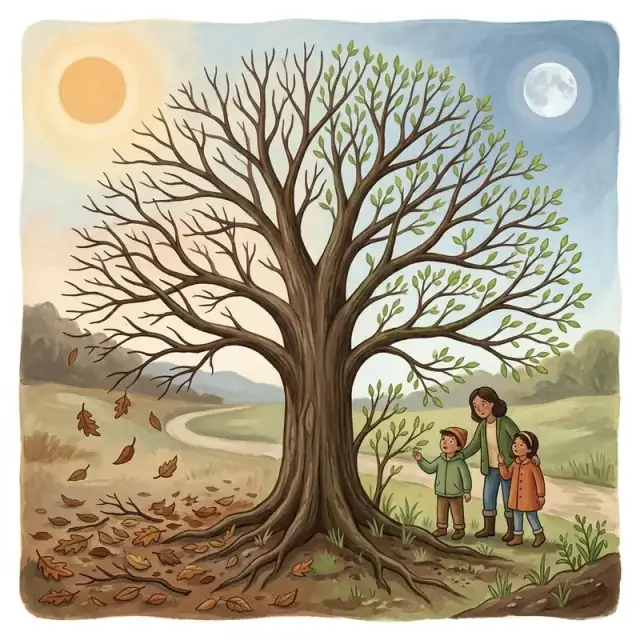
A tree shows bare twigs on one side and budding green leaves on another.
The tree's shifting, unpredictable display of seasonal stages reflects a capricious nature. It does not follow a linear, rational progression but instead changes state on impulse, showing how environmental factors can govern behavior in sudden, unexpected ways.
Image credit: Wordspun · AI-generated conceptual illustration
Questions about this word
What does "Capricious" mean?
Capricious is adjective meaning: Given to sudden, unpredictable changes of mood or behaviour.. Changing mood or behaviour suddenly and unexpectedly; governed by impulse rather than reason.
Where does the word "Capricious" come from?
From French capricieux, from Italian capriccio — a shiver of fear, later a sudden start or impulse. Possibly from capo (head) + riccio (hedgehog): the hair standing on end.