Amnesty
noun /ˈæm.nɪ.sti/ — An official pardon for a group, especially for political offences
Definition
An official pardon granted to a group of people — particularly for political offences — allowing them to return to society or resume normal life without prosecution. Amnesty is forgiveness institutionalised: not just for one person, but for a collective.
Beyond the definition
Amnesty is forgetfulness made policy — its Greek root is amnesia. The state formally decides to forget, to release the past, to allow a new beginning. Its power lies in its collectivity: no single person is singled out for grace.
Origin & history
Greek: amnēstia (forgetfulness, from amnēstos, forgotten). The ancient Greek concept of collective forgetting as a political tool — the state choosing not to remember, in the interest of peace.
Example sentences
Illustrative sentences for learning, not verified community posts or sourced quotations.
The new government offered amnesty to political prisoners from the previous regime.
An amnesty for tax debts brought in more revenue than enforcement would have.
Amnesty is the gamble that forgetting is more valuable than punishing.
How to use it
This entry uses a noun. Follow the examples for articles and singular or plural forms; not every noun takes “a” or “an.”
Choose “Amnesty” when the meaning fits your context: An official pardon granted to a group of people — particularly for political offences — allowing them to return to society or resume normal life without prosecution. Amnesty is forgiveness institutionalised: not just for one person, but for a collective.
Synonyms
pardon, general pardon, forgiveness, reprieve
Antonyms
prosecution, punishment, long memory
Related words
Amnesty vs pardon
Amnesty is usually granted to a large group for political or legal offenses. A pardon is typically granted to a single individual for a specific crime.
Word in the Wild
See how this word appears in life, language and stories.
Illustrative sentences and imagined stories for learning — not verified sightings, interviews, or sourced quotations.
Illustrative example
Audience Gathered for Community Festival
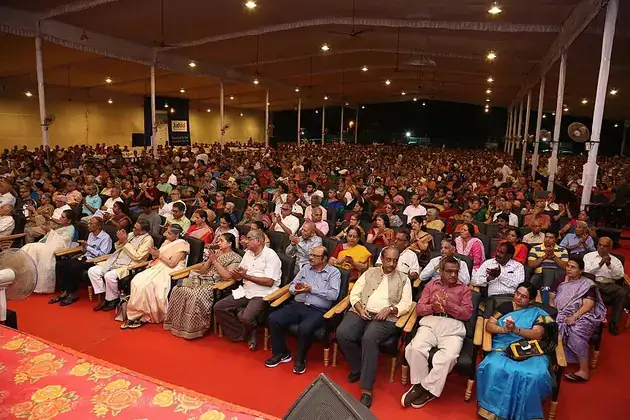
A large audience is gathered together in a public space to listen to a community music festival.
The inclusion of everyone in a community space mirrors the collective nature of amnesty. It is forgiveness institutionalised, granting a group the right to resume their life without the threat of past prosecution, restoring them to society.
Image credit: Abhijith Varadaraj S · CC BY-SA 4.0 (license)
Resized and converted to WebP; displayed with a fitted crop.
Questions about this word
What does "Amnesty" mean?
Amnesty is noun meaning: An official pardon for a group, especially for political offences. An official pardon granted to a group of people — particularly for political offences — allowing them to return to society or resume normal life without prosecution. Amnesty is forgiveness institutionalised: not just for one person, but for a collective.
Where does the word "Amnesty" come from?
Greek: amnēstia (forgetfulness, from amnēstos, forgotten). The ancient Greek concept of collective forgetting as a political tool — the state choosing not to remember, in the interest of peace.