Allusion
noun /əˈluː.ʒən/ — An indirect reference to another work, person, or event.
Definition
An indirect or passing reference to something — a person, event, text, or place — without full explanation, relying on the reader's or listener's prior knowledge to complete the meaning. Allusion is the literary technique of the assumed shared library.
Beyond the definition
Allusion rewards the reader who recognizes it — the reference deepens meaning, creates resonance, and confers a small pleasure of recognition. It also excludes those who don't share the reference.
Origin & history
From Latin 'allusio' (a playing with, a reference to); from 'alludere' (to play with, to jest about); from 'ad-' (to) + 'ludere' (to play). Playing toward something.
Example sentences
Illustrative sentences for learning, not verified community posts or sourced quotations.
When Toni Morrison alludes to the Bible, she assumes readers will feel the weight of what she doesn't spell out.
An allusion is only successful when the reference is shared — and reveals its exclusions when it is not.
The film's final scene was pure allusion — five different references in one image, legible at every level from none to all.
Synonyms
reference, indirect mention, hint, suggestion
Antonyms
direct statement, quotation, explicit reference
Related words
Allusion vs illusion
An allusion is an indirect reference to an idea or work. An illusion is a deceptive appearance or false perception of reality.
Compare this word
Word in the Wild
See how this word appears in life, language and stories.
Illustrative sentences and imagined stories for learning — not verified sightings, interviews, or sourced quotations.
Fictional scene
Archaeologist studying ancient abstract symbols
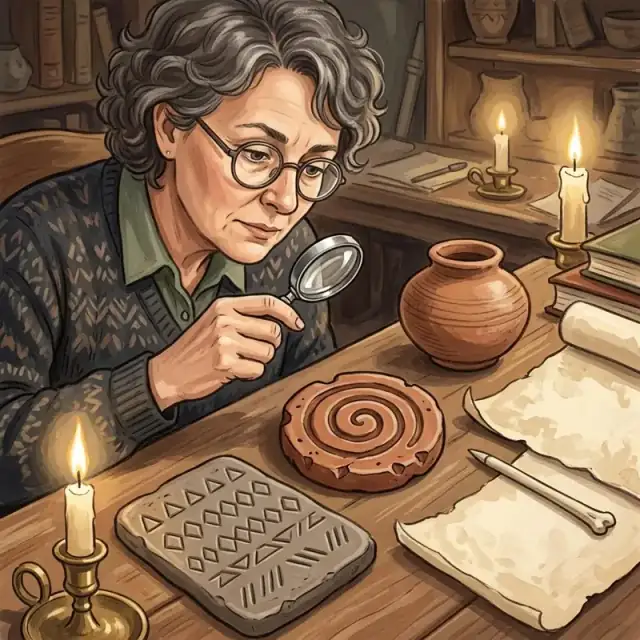
An archaeologist examines simple geometric tablet shapes and a worn spiral seal with a magnifying glass in candlelight.
The archaeologist studies ancient fragments, just as an allusion requires the reader to connect a text to a prior, unstated source. The image shows the act of decoding signs, mirroring how allusions rely on shared, pre-existing knowledge to create deeper significance.
Image credit: Wordspun · AI-generated conceptual illustration